Standfirst: Vietnam’s target of having 10,000 engineers and graduates in the semiconductor industry by 2040 demonstrates the government’s commitment but also presents a major challenge that requires urgent and decisive action.

The semiconductor industry has become and continues to be a pillar of the global economy, with a pivotal role in driving technological advancement and economic growth. With revenue projected to reach $600 billion this year, the industry is one of the most fiercely competitive in the world.

Against this backdrop, the Vietnamese Government has introduced various policies to promote the high-tech industry, such as the “Made in Vietnam” strategy and the national digital transformation initiative. The semiconductor industry has been identified as one of the government’s priority sectors, with the potential to generate high added value and elevate Vietnam’s position in the global value chain.

Lacking a skilled workforce

Vietnam possesses several Advantages for developing its semiconductor industry, including a young workforce, competitive labor costs, and a strategic geographic location in Asia. Meanwhile, rising global demand for semiconductor chips presents opportunities for it to participate in manufacturing, assembly, and testing phases.

However, the country also faces significant challenges. High-tech infrastructure remains limited, and there is a serious shortage of skilled professionals in the field. According to the Ministry of Science and Technology, Vietnam requires 5,000-10,000 semiconductor engineers annually but current training capacity meets only about 20 per cent of that demand. This underscores that workforce development is a key factor for the country to remain competitive in the semiconductor industry.

The industry involves a complex value chain comprising three main stages: design, fabrication, and packaging / testing. Each stage generates distinct sub-sectors with specific workforce requirements. First, the design phase is the most creative, where engineers must apply in-depth knowledge of electronics and software to develop intricate integrated circuit (IC) designs. Next, the fabrication stage focuses on producing semiconductor wafers through sophisticated physical and chemical processes. Here, process engineers play a crucial role with their expertise in materials, chemicals, and manufacturing technologies, while technicians must be highly skilled to operate advanced equipment. Finally, the packaging and testing stage is the last step, where chips are assembled and quality-tested before shipment.

In terms of workforce demand, design engineers are the most difficult cohort to train due to the requirement for deep domain expertise and exceptional creativity. To become a skilled design engineer, one typically undergoes long-term training, often in the order of five to ten years, covering both academic education and practical experience in IC development.

In contrast, packaging and testing technicians are easier to train, as their work primarily involves machine operation and implementing standardized quality control procedures, with training typically taking from six months to two years. Process engineers fall somewhere in between, requiring both theoretical knowledge and hands-on production skills, and generally take around three to five years to train.

These differences arise from the varying complexity and creativity of each stage. Workforce development strategies for the semiconductor industry should therefore prioritize training efforts based on the level of difficulty and foundational importance of each job group.

Experience of Taiwan and Malaysia

Taiwan’s semiconductor development strategy is a clear testament to long-term vision and strong national commitment to establishing the industry as an economic pillar, with the goal of contributing approximately 15-20 per cent of GDP. Spanning over three decades, the strategy is divided into three distinct phases, each with specific objectives aimed at steadily enhancing Taiwan’s position in the global semiconductor landscape.

The first phase, from 1980 to 1990, focused on building low-cost manufacturing capabilities by leveraging inexpensive labor to attract foreign companies to set up factories in the country. The second phase, from 1990 to 2000, marked a shift towards heavy investment in research and development (R&D) and chip design, with the aim of adding higher value and reducing reliance on foreign corporations. The third phase, from 2000 to the present, saw Taiwan develop cutting-edge technologies and expand globally, with leading firms like TSMC and MediaTek emerging to establish it as a global semiconductor powerhouse.

In terms of workforce development, Taiwan prioritized training manufacturing engineers before moving on to design and R&D engineers. This strategic sequencing was driven by a fundamental logic: manufacturing provides the basic infrastructure and immediate entry into global supply chains, generating revenue to invest in more complex stages later.

In the early stages, Taiwan concentrated on training manufacturing engineers and technicians to operate factories efficiently at low cost. Once a solid foundation was established, the second and third phases shifted focus to design engineers and researchers who could innovate and compete in higher-end market segments. It invested approximately $100 billion in this strategy overall, with its success underpinned by close collaboration between government, businesses, and academic institutions.

The key to its success lay in policy consistency, long-term investment commitment, and a strong work ethic among its people.

In the 1990s, meanwhile, Malaysia launched the Multimedia Super Corridor (MSC) initiative and invested in high-tech education to promote its semiconductor industry. However, these efforts were hindered by a lack of policy consistency and long-term vision.

Malaysia also faced “Brain Drain”, as many skilled engineers had sought better opportunities abroad due to low salaries and poor working conditions.

The country’s innovation ecosystem remained underdeveloped due to limited collaboration between universities, research institutes, and businesses. Universities emphasized teaching over applied research, while many local factories were merely offshore assembly sites for multinational firms like Intel, offering little support for local technological development. Underlying these issues were bureaucratic inefficiencies and the absence of strong government incentives or support mechanisms.

Malaysia also lacked robust cooperation between industry and academia as well as effective talent attraction and retention programs. Unlike Taiwan’s successful “Reverse Brain Drain” initiatives, Malaysia’s insufficient investment in joint research and attractive incentive schemes contributed to the widening gap between the two in semiconductor capability.

Lessons for Vietnam

Vietnam can draw several key lessons from this experience in developing human resources for the semiconductor industry. The most crucial takeaway is that it must implement consistent support policies with clearly defined priorities.

First and foremost, Vietnam needs to make substantial investments in education and training. This includes expanding specialized semiconductor programs at universities and research institutes, as well as following Taiwan’s example by establishing modern research centers and laboratories. These efforts lay the foundation for building a high-quality talent pool.

Second, fostering collaboration between industry and academia is vital. The government should encourage semiconductor companies to partner with universities in developing practical training programs and offering internships, helping students gain exposure to the latest technologies.

Third, attracting and retaining talent requires supportive policies such as simplified visa procedures, tax incentives, housing for international experts, and initiatives to encourage overseas Vietnamese professionals to return home.

Fourth, investing in R&D is essential to develop core technologies and specialized chip products. This can be achieved through the establishment of R&D centers that drive innovation.

And fifth, creating a favorable business environment is necessary. Vietnam should develop dedicated industrial parks and offer incentives to attract major global players like Samsung, Intel, and TSMC.

Among these, investment in education and training remains the most critical, as it serves as the backbone of all other efforts and determines the sustainable development of Vietnam’s semiconductor industry.

(*) Dr. Le Trung Hieu and Dr. Nguyen Dinh Trung are from the University of Economics and Business – Vietnam National University, Hanoi.
The 8.2km tunnel is part of Dien Chau – Bai Vot expressway in central Nghe An province.

The Ministry of Construction has approved the investment policy for completing the Than Vu Tunnel project, a key component of the North–South Expressway.

The 8.2-km tunnel is part of the Dien Chau – Bai Vot expressway section of the North-South Expressway running across Nghe An province in the central region and ends at Nghi Phuong interchange in the province’s Tha Linh commune.

According to the decision, the project’s key components include completing the tunnel’s left tube (in the North – South direction). with three lanes; and building a bridge and access road to the left tube, enabling the entire tunnel to operate with six lanes with a design speed of 80–100 kph.

The full completion of both tunnel tubes is considered essential to enhance traffic safety and efficiency of the expressway.

The project has a total investment capital of VND2.155 trillion ($81.9 million).

The project is scheduled for implementation from 2025 to 2027.


Operating in more than 170 countries, MEXC has backed technology competitions, career workshops, and blockchain community initiatives to encourage innovation among Vietnamese youth. The company aims to link the global Web3 ecosystem with local tech communities, offering hands-on experiences and interactive education in emerging technologies.

Furthermore, through numerous professional exchanges, collaborative initiatives, and open industry dialogues, MEXC has showcased its commitment to fostering a sustainable tech ecosystem in Vietnam.

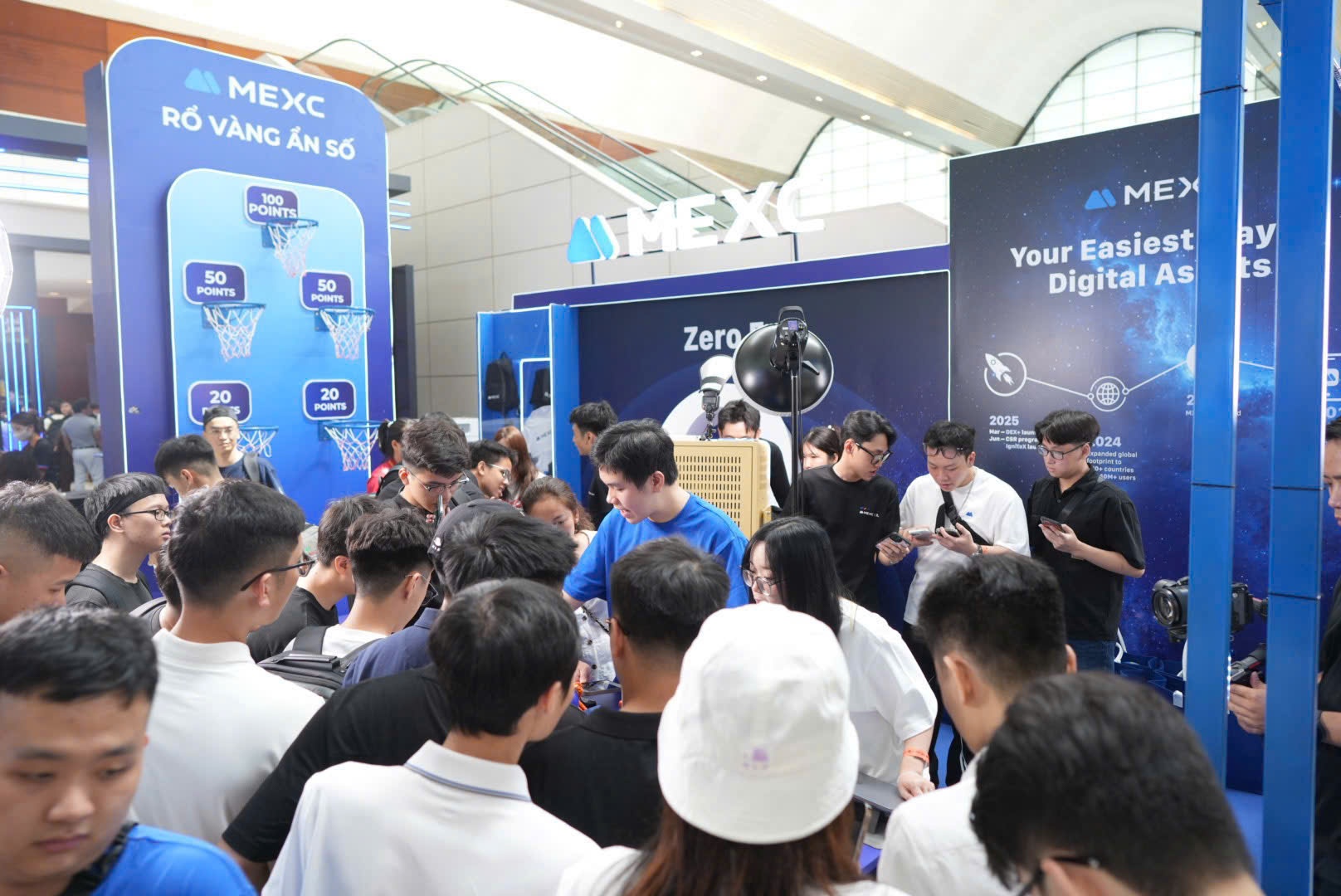
At GM Vietnam 2025, one of Asia’s largest blockchain and digital asset events, MEXC joined as a Diamond Sponsor, delivering a dynamic and engaging technology-community-creativity experience. The MEXC zone featured interactive sports areas like mini golf, an immersive AR and Web3 space with AR challenges and treasure hunts, and a community entertainment area including a photo booth.

MEXC empowers Vietnamese youth to drive innovation and creativity
The MEXC booth at GM Vietam 2025

Each activity was designed to encourage interaction, tech discovery, and community engagement – drawing thousands of participants throughout the event. The uniquely designed and creatively conceptualised MEXC booth was widely recognised by media outlets, industry experts, and attendees as one of the standout highlights of the event.

On the opening day, MEXC representatives were interviewed live by Vietnam Television (VTV), where they shared insights on MEXC’s vision to foster strategic partnerships and strengthen ties with the Web3 community in Vietnam. Beyond the main event, MEXC also organised two side events aimed at deepening engagement among developers, startups, and influential figures in the blockchain space.

Senior MEXC leaders also took part in key segments of the event, including a keynote speech by Nguyen Thai Phuong Trang (Dada), country business director of MEXC Vietnam, and a panel moderated by Tran So Ky (Yuky), the company’s COO.

During the panel discussion, Dada reaffirmed MEXC’s commitment to nurturing Vietnam’s tech ecosystem, especially by empowering young builders-from university students to innovative startups.

MEXC’s long-term vision in Vietnam is clearly reflected through its localised operations, educational programmes, workshops, hackathons, and its global MEXC Foundation initiative with a total budget of $30 million. This initiative supports blockchain education, career mentorship, project funding, and meaningful connections between students, developers, and industry stakeholders.

“With its vibrant, dynamic, and innovative tech community, Vietnam is poised to become Asia’s next Web3 hub,” Dada emphasised, expressing MEXC’s confidence in the country’s blockchain innovation and development potential.

MEXC empowers Vietnamese youth to drive innovation and creativity
Dada, country business director of MEXC Vietnam

She added, “Vietnam holds tremendous potential to develop a robust tech ecosystem, thanks to its young, tech-savvy population and strong innovative mindset. In fact, Vietnam ranks among the top 10 countries globally in terms of digital asset adoption. With upcoming regulations on digital assets, investors will soon gain access to a new and official investment avenue. Digital asset exchanges, once fully legalised, are expected to become one of the most appealing investment platforms for young people.”

MEXC is more than just a sponsor – it is a true companion to Vietnamese youth on their journey to connect, explore, and contribute to the nation’s thriving innovation and technology landscape.

Notable community and educational initiatives by MEXC in Vietnam

Sponsorship of student-led academic and startup competitions such as Trivia Night – Fulbright University Vietnam and Kawai Startup Competition – Foreign Trade University (Hanoi)

Support for technology and innovation competitions, including Hackathons and other tech contests

Organisation of regular career orientation and tech knowledge-sharing workshops in Ho Chi Minh City and Hanoi

A weekly AMA (Ask Me Anything) series, featuring livestreams with Web3 experts and thought leaders, designed to deliver foundational knowledge to young tech enthusiasts and newcomers

Charity and community development programmes, including scholarship donations, gift campaigns, and philanthropic initiatives in underprivileged areas.

MoF rejects digital asset trading proposal MoF rejects digital asset trading proposal

The Ministry of Finance (MoF) has rejected a proposal to pilot digital asset and cryptocurrency trading in upcoming financial centres, citing concerns over financial security and regulatory gaps, according to a statement on February 20.

Sandbox for crypto assets in Vietnam: if not now, when? Sandbox for crypto assets in Vietnam: if not now, when?

Vietnam has emerged as one of the world’s most dynamic cryptocurrency markets. According to various reports, the country has consistently recorded over $100 billion in annual crypto inflows from 2022 to 2024, surpassing its foreign direct investment multiple times.

Bybit Technology interested in sandbox on crypto assets Bybit Technology interested in sandbox on crypto assets

Minister of Finance Nguyen Van Thang held a meeting with Ben Zhou, co-founder of Bybit Technology. on April 17 to discuss the digital asset market.

Crypto transaction regulations more sophisticated than ever Crypto transaction regulations more sophisticated than ever

Under the new Law on Digital Technology Industry, to come into effect in 2026, digital assets are officially recognised, encompassing both virtual assets and cryptoassets, while excluding securities, digital fiat currencies, and other financial instruments.

Vietnam is EU’s top trading partner in ASEAN and its 16th largest globally.

Five years since its entry into force, the EU-Vietnam Free Trade Agreement (EVFTA) has catalyzed nearly $300 billion in two-way trade, establishing Vietnam as the EU’s top trading partner in ASEAN and its 16th largest globally, according to the European Chamber of Commerce in Vietnam (EuroCham).

In an era marked by rising global tensions and trade fragmentation, the EVFTA stands as a testament to inclusive, rules-based cooperation – one rooted in shared values, sustainability, and long-term strategic alignment, the EuroCham said in a press release issued on August 1.

Signed on 30 June 2019 and entering into force on 1 August 2020, the EVFTA is one of the EU’s most comprehensive and ambitious trade agreements with a developing nation. It has already eliminated over 70% of tariffs on various goods, with the remaining reductions – up to 99% – to be phased in over the coming years.

 Beyond tariff liberalization, the agreement also improves market access, strengthens intellectual property protection, and enhances regulatory transparency.

In fact, since its implementation, EU-Vietnam trade has grown significantly. Preliminary data from Vietnam’s National Statistics Office shows that EU-Vietnam two-way trade reached $298 billion between August 2020 and May 2025 alone. This five-year figure accounts for nearly 40% of the $815 billion in cumulative trade recorded over 30 years of economic and trade cooperation since 1995 – a powerful proof of the EVFTA’s catalytic impact.

Vietnam now leads first in ASEAN and 16th in the world for goods trade with the EU, exporting everything from electronics and textiles to furniture and agri-food products. In return, Europe is Vietnam’s third largest exporting destination and fourth largest source of imports, supplying high-tech machinery, vehicles, pharmaceuticals, and green technologies.

Beyond tariff reductions, the EVFTA has opened new doors for European businesses to tap into Vietnam’s rapidly growing domestic market – from public-private partnerships to incentivized foreign direct investment. 

The project lays foundation for sustainable urban development in Vietnam

A closing ceremony for the project “Institutional Strengthening and Capacity Building for Sustainable Urban Development in Vietnam” (ISCB) was held in Hanoi on August 1 by the Ministry of Construction, in collaboration with the United Nations Human Settlements Program (UN-Habitat) and the Embassy of Switzerland, Swiss Cooperation Office in Vietnam.

The project, financed by the UN-Habitat and Switzerland, lays the foundation for a renewed vision toward sustainable urban development in the country, the Government News remarks.

As part of the event, participants visited a curated showcase illustrating Vietnam’s urban transition, comparing baseline conditions in 2020 with the progress achieved through ISCB initiative. While having rapid urbanization, Vietnam still faces significant challenges, including spatial inequality, fragmented policy implementation, and a shortage of skilled professionals in integrated urban planning.

The ISCB project was specifically designed to address these gaps by reinforcing institutional frameworks, delivering practical and context-responsive training, and promoting multi-stakeholder planning approaches that align with international best practices.

Representatives from UN-Habitat and Switzerland echoed these views, reaffirming Vietnam’s growing role in the global urban development agenda and commending the ISCB project’s forward-looking, inclusive approach, particularly at a time when the country is undergoing historic administrative consolidation and restructuring.

The Government News quoted Mr. Aldo de Luca, Deputy Ambassador of Switzerland to Vietnam as saying that “Sustainable urban development begins with strong institutions, empowered communities, and inclusive planning. Switzerland is proud to support Vietnam in shaping resilient, liveable, and economically vibrant cities through strengthened urban policies and institutional capacities.” –

One of ISCB’s key achievements is the development of a Sustainable Urban Development (SUD) Training Program, comprising six modules. These modules were co-designed based on the training capacity of the Academy of Construction Strategy and Cadres Training, international experience from UN-Habitat and development partners, as well as needs assessments from local agencies within the Academy’s partner network.

The six training modules were piloted through nine capacity-building courses, directly implemented by the Academy with technical support from UN-Habitat. The program attracted hundreds urban managers and technical officers across various provinces.

In addition, 37 trainers successfully completed the Training of Trainers (ToT) course, 20% of whom went on to facilitate and coordinate SUD courses. This laid the foundation for a self-sustaining network of trainers and technical advisors, enabling localities to continue accessing knowledge and tools for sustainable urban development beyond the project’s lifecycle.


At the same time, the global toolkit “Our City Plans” (OCP), which is developed by UN-Habitat to promote participatory planning, was localized, refined, and piloted in Vietnam. Serving as a flexible and adaptable framework, OCP empowers inclusive urban planning from the grassroots to the provincial level. It guides local governments and communities to co-create visions, design public spaces, and implement development plans through collaborative and participatory methods.

Sustainable urban development requires the stability and comprehensiveness of policy and regulatory frameworks related to urban development management.

Within the framework of the ISCB project, institutional strengthening activities have been implemented to support the Ministry of Construction and the former Ministry of Planning and Investment (now the Ministry of Finance) in enhancing their policy-making capacities.

Both national and international experts shared knowledge, experiences, and practical assessments to support the development and implementation of legal and regulatory documents related to urban management and development.

For the former Ministry of Planning and Investment, the project focused on working with the Department of Planning Management to assist in the formulation of provincial planning, and to promote cross-sectoral coordination in the revision and amendment of the Planning Law.

ISCB’s policy recommendations, tools, and training materials were aligned with the Sustainable Development Goals (SDGs) and the New Urban Agenda, contributing to Vietnam’s broader commitment to inclusive and sustainable urban growth.

A key highlight of the event was a demonstration of the participatory planning approach. Through pilot activities in the former province of Ben Tre (now Vinh Long) in the Mekong Delta and in the former town of Tam Ky in the central province of Quang Nam (now Tam Ky Ward in central Da Nang city), the project created conditions for communities to take an active role in shaping visions, designing public spaces, and providing policy feedback. More than 1,000 residents and local officials participated in consultation sessions, surveys, co-design workshops, and co-creation processes, clearly illustrating a shift from “being planned for” to “planning together.”

Mr. Frank D’hondt, ISCB’s Chief Technical Consultant, presented the project’s overarching strategic vision, linking it with Vietnam’s international commitments and the SDGs. A panel discussion featuring representatives from the Ministry of Construction, Swiss Cooperation Office in Vietnam, and national training academies reinforced the need for intersectoral coordination in planning, capacity-building, and financing local initiatives in the post-project phase.

In his closing remarks, Mr. Ngo Anh Tuan, Director General of the Academy of Construction Strategy and Cadres Training, as quoted by the Government News, affirmed that: “The ISCB project has helped clarify the reality that sustainable urban development cannot rely solely on infrastructure investment. It must start with strong institutions, capable people, and transparent processes. The results of the project will continue to be integrated by the Ministry of Construction into national action programs, technical guidance documents, and future policies supporting localities”.

The tools, outcomes, and lessons from ISCB will continue to be disseminated through a growing network of experts, training institutions, and technical assistance mechanisms. As Vietnam enters a new phase of complex urban challenges, ISCB leaves behind a practical foundation to ensure that localities will not walk this path alone.

At a conference on August 2, Prime Minister Pham Minh Chinh highlighted that the IFC will play a role in elevating Vietnam’s position in the global value chain of finance, investment and high-end services.

Chairing a conference held on August 2 in HCM City  on the implementation of the National Assembly’s Resolution No. 222/2025/QH15 on the international finance center (IFC), Prime Minister Pham Minh Chinh instructed Ho Chi Minh City and Da Nang city to mobilize resources and lay the groundwork for the development of Vietnam’s IFC.

Resolution No. 222/2025/QH15, which will take effect on September 1,  introduces a range of breakthrough and competitive mechanisms to support the centre’s development in Ho Chi Minh City and Da Nang city,  with unified operation, management and supervision, all while promoting the strengths of each locality.

To implement the resolution, a steering committee was formed to help the Government direct strategies and development orientation, and ensure smooth operation of the IFC, with the PM acting as the head of the steering committee.

The steering committee focuses on building a specialized legal framework for the IFC; synchronously developing infrastructure and essential services; building a modern financial ecosystem; and establishing an effective coordination and supervision mechanism for it.

Under an action plan issued by the steering committee in Decision No. 114/QD-BCDTTTC, dated August 1, 2025, the IFC will be completed and put into operation by the end of 2025.

At the conference, HCM City and Da Nang presented their own action plans for the IFC, while representatives from different countries and international financial organizations shared development experiences and vowed to help Vietnam with its IFC.

PM Chinh was quoted by the Vietnam News Agency as stating at the conference that Vietnam is entering a new era of growth, with two 100-year strategic goals for 2030 and 2045. The Government has set out an economic growth target of 8.3 – 8.5% in 2025, and double-digit growth in the following years.

The establishment of an IFC plays an important strategic role in attracting foreign investment, technology and high-quality workforce, which will boost the country’s economic development and competitiveness, according to the Government leader.

He said that the IFC will play a role in elevating Vietnam’s position in the global value chain of finance, investment and high-end services.

It will also help the country develop a modern, international-standard financial and banking service ecosystem to meet the increasing needs of businesses and investors, as well as enhancing its own financial market to be transparent, effective and reaching international standards, the PM added.

Additionally, the IFC is expected to lead new financial models, facilitating digital assets, carbon credit, digital banking and exchanges for commodities and derivatives, which are the pillars of finance of the future.

The development of the IFC is a difficult, unprecedented task, and so it cannot be rushed, but it also cannot be “too perfectionist” – experiences will be drawn as part of the implementation, the PM stressed.

It must ensure a balance of financial freedom and financial security, as well as transparency, oversight and adherence to international laws, he said.

The PM also commended the support of businesses and international friends, and called for new policies for the IFC’s development to be disruptive and greatly preferential.

The PM has instructed ministries, branches and central agencies to quickly issue documents to guide the implementation of the NA’s Resolution, so that HCM City and Da Nang have a legal basis to establish executive agencies and supervisory agencies, and soon put the IFC into operation.

They must also work closely with other financial organizations in Vietnam and around the world, learn from other countries’ experiences, and regularly update and improve the institutional framework for the IFC to ensure new, competitive mechanisms.

HCM City and Da Nang are to prepare resources, infrastructure and favorable conditions to smoothly build their respective IFC, as well as working with strategic investors and financial partners as they build new financial products, services and policies.

“[The two cities] will continue to study the recommendations of organizations, business communities and international experts on financial fields and services that can be developed in the IFC to increase competitiveness, ensuring that the two locations develop harmoniously and complement each other,” the PM said.

Vietnam’s IFC will be among the world’s 75 financial centers by the end of 2035, he said.

After the conference, the PM visited the site for building the IFC in HCM City.

The 729ha IFC will span across Sai Gon, Ben Thanh and Thu Thiem wards, and feature an urban administrative agency, exhibition conference centre, planning information centre and other facilities.

HONG KONG SAR – Media OutReach Newswire – 30 July 2025 – Pacific Century Premium Developments Limited (“PCPD”, SEHK: 00432) announced its interim results for the six months ended June 30, 2025.
The consolidated revenue of PCPD and its subsidiaries (together, the “Group”) amounted to HK$ 736 million, compared to HK$ 545 million for the corresponding period of 2024.
The Group’s consolidated loss attributable to equity holders of the Company for the first six months of 2025 totalled HK$249 million, compared to a net loss of HK$153 million for the corresponding period last year. Basic loss per share for the six months ended June 30, 2025 was 12.23 Hong Kong cents, compared to a loss per share of 7.52 Hong Kong cents for the corresponding period of 2024.
The Board of Directors did not declare an interim dividend for the first half of 2025.
Throughout the first half of 2025, the Group continued to build on its growth momentum and delivered a solid set of results. Our operations in Japan were particularly strong, supported in part by robust tourism growth and a relatively weak Japanese Yen. Park Hyatt Niseko, Hanazono, our hospitality business in Niseko, Hokkaido, reported a significant uplift in revenue. During the period, our ski operations remained a standout performer in the region. Earnings from our recreational facilities at the resort, ski lifts, equipment rentals, “Hanazono EDGE” (a restaurant and entertainment centre) and Niseko International Snowsports School continued to grow steadily year-on-year. We will remain focused on enhancing Niseko Hanazono Resort into a world-class, all-season luxury resort, and we are confident in its ability to deliver long-term value.
In Jakarta, our premium commercial building, PCP Jakarta, delivered a steady performance and remained a reliable revenue contributor to the Group. As of June 30, 2025, the office space committed occupancy was 85 %. The gross rental income amounted to HK$100 million for the six months ended June 30, 2025, as with the same period in 2024.
As for the development of the project at 3–6 Glenealy, Central, Hong Kong, the construction of its superstructure has been progressing well. The project is scheduled to be completed by early 2026.
Benjamin Lam, PCPD’s Deputy Chairman and Group Managing Director, said: “The year 2025 has been characterised by geopolitical uncertainties and a global economy continuing to adjust to changes. Despite some optimistic projections at the start of the year, the first half has been marked by slower-than-expected economic growth in some developed nations. Despite these headwinds, the global economy has shown encouraging resilience. Inflation in many advanced economies is moderating, and business investment is gradually picking up as confidence improves. With its diversified portfolio and strong business fundamentals, PCPD is well positioned to navigate the evolving landscape and gain its growth momentum.
Moving into the second half of the year, we aim to leverage our existing key resources, and maximise value for our stakeholders to achieve sustainable business growth.”

The issuer is solely responsible for the content of this announcement.

Vietnam has charted a path towards double-digit, sustainable growth by 2030 through innovation, reform, digitalization, and strategic productivity improvements.

Amid numerous challenges stemming from global instability, rapid technological advancements, and climate change, Vietnam must undergo a deeper and more robust transformation of its growth model, anchored in science and technology, innovation, and the development of a high-quality workforce. Institutional improvements, economic restructuring, enhancements to the business and investment environment, increased investment in research and development (R&D), and the strengthening of science and technology capabilities are key factors that will determine the country’s ability to secure rapid and sustainable growth.

The Party and the State have set a target of achieving a growth rate of 8 per cent or higher this year and then double-digit growth during the 2026-2030 period, with the goal of joining the ranks of upper-middle-income countries by 2030 and high-income countries by 2045. The pursuit of double-digit economic growth is not only a strategic aspiration but also a measure that reflects the country’s vision, determination, and capacity for macro-economic management.

Driving sustainable growth

Vietnam is facing an urgent need to enhance its competitiveness, restructure its economy, and fully leverage opportunities from international economic integration to achieve its sustainable development goals. However, the path to realizing the ambition of double-digit growth poses multiple challenges in terms of institutional frameworks, resources, quality of growth, workplace productivity, science and technology, and the internal capacity of enterprises.

Moreover, the global landscape is undergoing major shifts, such as geopolitical tensions, evolving policies among major powers, digital transformation, supply chain realignment, and the demand for green and sustainable development, which all require that Vietnam adopt flexible, effective, and breakthrough development strategies.

While Vietnam has made efforts to shift towards a growth model based on science, technology, and innovation, limitations in human resources and restricted investment resources continue to hinder breakthroughs in this regard.

Experts warn that without bold policy breakthroughs, Vietnam’s economic growth may continue to rely heavily on exports and FDI, resulting in only moderate growth rates and limited prospects for breaking out of the middle-income trap. Transforming the growth model to strengthen internal capabilities and mitigate external risks has become imperative in the current context.

Dr. Dang Duc Anh, Deputy Director of the Institute for Policy and Strategy Research, has identified five key limitations in the quality of growth and its contribution to economic expansion.

First, workplace productivity growth has been inconsistent and shows signs of slowing.

Second, the contribution of Total Factor Productivity (TFP), which reflects efficiency gains in capital and labor use due to technological upgrades, production rationalization, management improvements, and workforce skills enhancement, remains low, especially in high-potential localities. According to the Asian Productivity Organization (APO), Vietnam’s TFP index has increased 1.17-times over the past 50 years, lower than Malaysia (1.69) and Singapore (1.63) in the ASEAN-4 but higher than Thailand (1.04) and Indonesia (1.05). In comparison, China’s TFP index rose 2.52-times in the 50-year period, Japan’s 1.4-times, South Korea’s 2.09-times, and the US’s 1.4-times. Limited investment in technology and innovation has resulted in weak science and technology capacity, with no significant productivity breakthroughs. Major cities such as Hanoi and Ho Chi Minh City, despite having the conditions to improve growth quality, have seen only modest results. Workplace productivity growth in these cities remains well below targeted levels. The manufacturing and processing sector, deemed a growth driver, has shown limited and unstable productivity gains, with a declining trend in recent years.

Third, the efficiency of investment capital use remains low, limiting improvements in growth quality. Though Vietnam’s Incremental Capital-Output Ratio (ICOR) has improved, it is still relatively high against many countries and territories in the region and the world. Compared to countries and territories transitioning towards high-income status or investing heavily in infrastructure, such as China, South Korea, Thailand, and Malaysia, Vietnam’s ICOR is significantly higher. Even within the same development stage, Vietnam’s ICOR surpasses that of many ASEAN nations. Additionally, while it has deeply integrated into the global economy and attracted large volumes of FDI, the role of FDI in improving productivity and growth quality remains limited. The impact of international trade on strengthening the science, technology, and innovation capacity of domestic enterprises has also been modest.

Fourth, the quality of Vietnam’s workforce has improved slowly, with a shortage of highly-skilled workers. Though the proportion of trained workers with certificates or degrees has increased, it remains low relative to the total workforce. There is a lack of skilled, technically-trained workers, and the economy is facing a shortage of highly-qualified professionals to meet the demands of digital transformation. The trend of major corporations establishing their own universities and vocational colleges highlights the inadequacies in the training quality of existing higher education and vocational institutions.

Fifth, the level of technological application, innovation, digital transformation, and technological capabilities of Vietnamese enterprises remains very limited. Efforts to drive growth based on science, technology, and innovation are progressing slowly, with limited results. The manufacturing and processing sector still relies on low technology or is mainly involved in assembly stages, generating low added value. The technological and digital capabilities of enterprises remain underdeveloped, and are unable to keep pace with global trends. Vietnam’s readiness for digital transformation and the adoption of key technologies from Industry 4.0 remains low.

In analyzing factors that will impact the quality of economic growth to 2030, experts believe that beyond geopolitical tensions and global power rivalries, the digital technology revolution will be a crucial driver of higher-quality growth. Additionally, the imperative of sustainable development is forcing Vietnam to enhance its growth quality. Most importantly, institutional reform plays a pivotal role in this transition.

Experts have noted that while Vietnam’s economic growth quality has shown positive changes over the past decade, reflected in improved workplace productivity and capital efficiency and the increasing contribution of TFP to growth, progress has not yet met expectations. Workplace productivity growth has stalled, innovation and technological adoption remain limited, and investment capital is still used inefficiently compared to the country’s regional peers.

Given the numerous challenges, from global instability and rapid technological shifts to climate change and a fading demographic dividend, Vietnam must shift to a deeper, more robust growth model based on science, technology, innovation, and high-quality human resources development.

Improving institutional frameworks, restructuring the economy, enhancing the investment climate, investing in R&D, and building up scientific and technological capacity will be key determinants of Vietnam’s ability to sustain rapid and sustainable growth. Enhancing growth quality is not only a necessity but the only viable path for Vietnam to escape the middle-income trap and achieve rapid, sustainable development in the decades to come.

According to Dr. Duc Anh, to achieve an average annual growth rate of 10 per cent or more during the 2026-2030 period, Vietnam’s workplace productivity would need to grow by 8.1-8.6 per cent annually. With TFP contributing an average of 55 per cent to growth, total social investment would need to increase by 8.6-9.3 per cent a year. This would correspond to an investment-to-GDP ratio of 36.4-40.8 per cent.

Building on reform and innovation

Acknowledging the immense challenges from both external and internal environments, experts have emphasized that Vietnam must adopt appropriate macro-economic policies that leverage domestic strengths while mitigating risks from global macro-economic instability and geopolitical tensions.

A consistent approach is needed to achieve high and sustainable economic growth by 2045, one that maintains macro-economic stability, establishes appropriate and flexible growth scenarios with risk control mechanisms, enhances workplace productivity, assesses the environmental and social impacts of growth targets, and identifies growth drivers from both aggregate supply and demand.

At an economic growth roundtable held in early June, Associate Professor Pham The Anh from the National Economics University proposed that Vietnam develop a concrete long-term plan, supported by policies on taxation, credit, and business environment tailored to priority industries with competitive advantages. At the same time, it is essential to strengthen the training of high-quality human resources and increase investment in R&D. Moreover, investment should be selectively channeled into high-impact infrastructure projects, avoiding fragmentation and ensuring alignment with strategic priorities. Mobilizing resources for major public investment projects requires restructuring expenditure and identifying sustainable revenue sources.

In terms of productivity, which is considered the most crucial growth driver, necessary solutions include structural transformation, efficiency enhancements, extensive growth, and innovation.

According to the Institute for Policy and Strategy Research, effectively implementing the “Four Pillars” of Resolutions (Resolutions No. 57, 59, 66, and 68), along with reforming the administrative apparatus and restructuring central and local governments towards greater efficiency, performance, and effectiveness, will create favorable conditions for improving growth quality and achieving breakthroughs in productivity.

Mr. Nguyen Canh Cuong, former Trade Counsellor in France and the UK, Minister Counsellor in Belgium and the EU, and Lecturer at the University of Economics, Vietnam National University, emphasized: “To achieve rapid and sustainable development, it is essential to identify and synchronously implement key factors in a substantive and effective manner.”

One of the critical pillars, he believes, is the development of high-tech industries and innovation. Vietnam must accelerate the transition from a labor-intensive industrial model to a knowledge-based, clean technology-driven economy. Strategic sectors such as semiconductors, robotics, electric vehicles, new materials, and digital technologies should be prioritized, with clear investment strategies in R&D and stronger links between enterprises, research institutes, and universities.

In parallel, developing green industries and a circular economy is vital to realizing Vietnam’s net-zero emissions commitment by 2050. This requires the synchronized development of renewable energy, electrified transportation, sustainable consumption, and infrastructure to support the circular economy model.

Mobilizing financial resources from society and promoting green finance are among the critical levers for ensuring sustainability in development. Solutions include developing the capital market, expanding public-private partnerships (PPPs), and enhancing the application of environmental, social, and governance (ESG) criteria in credit appraisal and public investment allocation.

He also stressed that comprehensive digital transformation plays a pivotal role in improving productivity and the overall efficiency of the economy. The goal is for the digital economy to contribute around 30 per cent of GDP by 2030. To reach this, core technologies such as AI, big data, and the Internet of Things (IoT) must be deeply integrated into production, business, and public services, supported by the development of national digital infrastructure and improved digital skills in the workforce.

In addition to high-quality human resources, Mr. Cuong also emphasized that institutional reform and improved governance efficiency are foundational conditions for ensuring the success of all development efforts.

To realize rapid and sustainable development, Vietnam needs a comprehensive strategy that integrates multiple pillars: innovative industrialization, modern agriculture, cultural and tourism services, a resilient domestic market, and effective institutions. According to Mr. Cuong, the success of this strategy will not only depend on sound policymaking but also on execution capacity and close coordination between the government, businesses, and society at large.

Strategic breakthroughs and new growth drivers

During discussions on rapid and sustainable growth at the ninth session of the 15th National Assembly (NA), Deputy Tran Hoang Ngan from Ho Chi Minh City analyzed that over nearly 40 years of “Doi Moi” (Economic Renewal), Vietnam’s economy has maintained continuous growth, with its highest annual rate recorded in 1995, of over 9.5 per cent. However, during that period, the country was affected by several external shocks, such as the Southeast Asian financial crisis in 1997 and the global financial crisis and economic recession in 2008.

To ensure rapid and sustainable growth in this new development phase, economist Tran Hoang Ngan has emphasized the need for fundamental, long-term strategic solutions to reduce the impact of external shocks.

First, Vietnam must persist with its three strategic breakthroughs: institutional reform, infrastructure development, and human capital. Regarding institutions, the Party General Secretary has identified institutional bottlenecks as the root of all other constraints. The Government and National Assembly have been actively working to improve the institutional framework, particularly the socialist-oriented market economy. The ninth session of the NA passed dozens of laws and resolutions of great significance, institutionalizing the Party’s orientations and policies through the “four strategic pillars” and Resolution No. 60-NQ/TW from the 13th Party Central Committee.

Second, restructuring the three traditional growth drivers, including exports, investment, and consumption, must proceed. With regard to consumption, more attention should be paid to the domestic market, especially the consumer base of 100 million people.

Third, unlocking three new growth drivers: science and technology, innovation and digital transformation, and new development spaces supported by the NA resolution on reorganizing 34 provincial-level administrative units. With a compatible institutional framework and synchronized infrastructure investment, these three new drivers will help accelerate growth in the time to come.

To reduce vulnerability to external shocks, Vietnam must maximize its inherent potential and advantages, particularly in agriculture, the marine economy, tourism, and service sectors such as banking and finance.

Sharing this view, Deputy Le Huu Tri from south-central Khanh Hoa province emphasized that to achieve the country’s growth goals it is essential to prioritize economic expansion, maintain macro-economic stability, and control inflation. He stressed the need to stay focused and persistent in implementing the three strategic breakthroughs, especially by continuing to build and improve institutions aimed at more transparent policies, seamless infrastructure, and smart governance. This will help reduce compliance and logistics costs, enhance workplace productivity, and improve competitiveness.

In addition, he advocated for accelerating the development of strategic infrastructure, concentrating resources on key projects to drive regional and inter-regional economic development. There must also be a strong focus on training and developing a high-quality workforce capable of meeting the demands of the digital economy and global integration, while also improving the efficiency and effectiveness of law enforcement and social governance.

Several other opinions have also highlighted the importance of tapping into new growth drivers such as the green transformation, the circular economy, and innovation, especially in the context of Vietnam’s commitment to achieving net-zero emissions by 2050. This is not only a responsibility but also a major opportunity for the country to change its growth model. At the same time, the development of the digital economy, digital infrastructure, and open data must be considered foundational platforms for achieving sustainable economic growth in the digital age.


Hanoi will also officially implement a fare increase for its urban railway on both Line 2A and Line 3.1, effective August 1.

Starting August 1, Hanoi will pilot a virtual ticketing system for daily and weekly passes on its two urban railway lines: Line 2A (Cat Linh – Ha Dong) and Line 3.1 (Nhon – Hanoi Railway Station).

The new virtual tickets will be linked to a passenger’s personal account and displayed directly on their smartphone via the “HN Traffic Ticket Card” (Thẻ vé giao thông HN) application.

To use the service, passengers can download the app, create an account, select their desired pass, and complete the payment via QR code through their banking app. The ticket is then displayed on their phone for presentation at station gates. For security, the QR code on the ticket automatically refreshes every 30 seconds and features a flashing “Tramoc” logo to verify its authenticity.

This digital system is expected to reduce printing and distribution costs while offering passengers greater convenience. It allows for easy tracking of travel history, quick registration, and provides a contactless experience.

Concurrently with the launch of the virtual ticket pilot, Hanoi will also officially implement a fare increase for its urban railway on both Line 2A and Line 3.1, effective August 1.

However, the city will continue its existing policy of providing free travel for specific groups, including individuals with meritorious service to the nation, persons with severe disabilities, and children under the age of six.

Vietjet outperforms targets, wins Long Thanh project bid

According to its Q2 financial report released on July 31, Vietjet recorded aviation revenue of VND17.68 trillion (approximately $674.46 million), with pre-tax profit reaching VND775 billion (approximately $29.57 million), an increase of 52.3 per cent on-year.

Vietjet achieved total consolidated revenue of VND17.89 trillion (approximately $682.29 million) and a pre-tax profit of VND815 billion (approximately $31.09 million), representing a remarkable increase of 151.5 per cent on-year. Ancillary revenue contributed over VND6.89 trillion (approximately $262.98 million), significantly boosting overall revenue.

For the first half of 2025, Vietjet reported aviation revenue of VND35.6 trillion (approximately $1.35 billion) and a pre-tax profit of nearly VND1.6 trillion (approximately $61.04 million), up 37 per cent on-year. Consolidated revenue reached VND35.8 trillion (approximately $1.36 billion), with pre-tax profit exceeding VND1.6 trillion (approximately $61.04 million), a 65 per cent increase on-year.

By the end of Q2, Vietjet operated a total of 154 routes (109 international and 45 domestic), completing nearly 41,000 flights and transporting 7.5 million passengers. The total freight volume transported during the quarter approached 29,000 tons.

As of June 30, Vietjet’s total assets amounted to over VND112.33 trillion (approximately $4.28 billion), with a debt-to-equity ratio of 1.76 and a liquidity ratio of 1.44, indicating strong financial health in the aviation sector. Cash reserves, bank deposits, cash equivalents, and short-term investments exceeded VND9 trillion (approximately $343.48 million), coupled with working capital limits, ensuring the company’s liquidity.

The carrier paid over VND4.53 trillion (approximately $172.74 million) in direct and indirect taxes and fees in the first half of 2025.

The airline boasted a technical reliability rate of 99.53 per cent and has been recognised by AirlineRatings as the “Worlds’ Best Ultra Low-Cost Carrier”, ranking among the safest airlines globally.

Q2 marked a new milestone in Vietjet’s strategy to expand its international network, launching direct flights from Nha Trang to three major cities in Russia: Vladivostok, Khabarovsk, and Blagoveshchensk.

In China, the airline inaugurated services connecting Hanoi and Ho Chi Minh City with Beijing, Guangzhou, and Shanghai, addressing the growing demand for travel and trade. Vietjet also expanded routes to India and Japan and increased domestic flight frequencies to Danang, Nha Trang, and Tuy Hoa.

In tandem with these positive financial and operational results, Vietjet continued to invest in and develop a modern aircraft fleet.

The airline ordered an additional 20 wide-body A330neo aircraft from Airbus during French President Macron’s visit to Vietnam, bringing its total A330neo orders to 40, making Vietjet the airline with the largest A330neo orders.

At the 2025 Paris Air Show, Vietjet placed a new order for 100 aircraft and 50 options for new Airbus A321neo aircraft. This represented the largest aircraft order at the Paris Air Show 2025, positioning Vietjet among the top 10 airlines globally with the largest orders.

Additionally, the carrier is taking charge of ground services at the country’s largest airports, enhancing service quality control, optimising operational efficiency, and providing an enjoyable experience for passengers.

The Ministry of Construction has approved Vietjet’s winning bid for the investment and construction of aircraft maintenance services at Long Thanh Airport. These projects are part of a comprehensive aircraft maintenance complex serving domestic airlines, ensuring national interests and meeting operational requirements for Long Thanh International Airport’s first phase.

Vietjet continued to assert its position as a new-generation airline with positive business results in H1, achieving separate and consolidated pre-tax profits of 78 per cent and 75 per cent of its annual plan, respectively.

These strategic moves reinforced Vietjet’s internal capabilities and also laid a solid foundation for strong growth in the latter half of 2025, aiming at sustainable development and flying higher on the global aviation map.

Vietjet posts record revenue in 2024 Vietjet posts record revenue in 2024

Expanding its international flight network to meet mounting travel demands through an ever-growing modern fleet, Vietjet reported strong revenue and profit growth in the fourth quarter and throughout 2024.

Vietjet launches Singapore – Phu Quoc route Vietjet launches Singapore – Phu Quoc route

The launch of Vietjet’s direct Singapore – Phu Quoc route marks a bold step in the airline’s regional growth strategy, reinforcing its commitment to sustainable development and strengthening economic ties between Vietnam and Singapore.

Vietjet announces new managing director Vietjet announces new managing director

Vietjet Aviation JSC has announced the appointment of Nguyen Thanh Son as the company’s managing director, succeeding Dinh Viet Phuong, leading the new age carrier in the next era of development.