Attorney at Law
Founding Partner
Attorney at Law
Senior Partner
Experts warn investors to assess valuation levels against the growth potential of these companies for informed decisions.

The domestic stock market has seen an impressive performance of mid- and small-cap stocks, outperforming the market average.
However, experts warn investors to assess valuation levels against the growth potential of these companies for informed decisions.
Post-Lunar New Year, there has been a notable improvement in market liquidity, with funds spreading across various sectors, leading to an overall increase in stock prices.
The VN-Index has risen for five consecutive weeks, surpassing the significant 1,300-point threshold, a level it struggled to breach throughout 2024.
Average trading value since early February has reached approximately 17.5 trillion VND (684.5 million USD) per session, marking a 36% increase compared to January. In the most recent week, liquidity exceeded 20 trillion VND per session.
However, when compared to the same period last year, February’s liquidity was down by 25%, and year-to-date figures show a 28% decrease.
During this period, mid- and small-cap stocks, particularly in sectors like mining, building materials, construction, rubber and chemicals, have experienced significant price increases.
The market surpassing the 1,300-point threshold, driven by mid- and small-cap stocks, is seen as a positive signal, especially amid global market volatility.
In February, the top ten best-performing stocks were dominated by the mining sector (Yen Bai Industry Mineral JSC, Fecon Mining, Becamex) and financial services sector (Icapital Investment JSC, APG Securities, Ocean Group JSC).
The recent surge in mineral stocks can largely be attributed to escalating trade tensions among major economies, said Lam Gia Khang, Head of Market Strategy at VietinBank Securities.
With China tightening export controls on key raw materials, particularly strategic metals and minerals, supply chain disruptions have driven investors toward these stocks.
However, after a strong rally, investors should be cautious. Despite the price surge, profits after tax in this sector have remained low in recent years, making valuations less attractive and raising the risk of short-term corrections.
Meanwhile, some non-life insurance stocks have been gaining momentum, partly due to a recovery in insurance demand after the crisis of confidence at the end of 2022.
Vietnam’s insurance market still has substantial growth potential. By the end of 2024, the insurance penetration rate (measured by premiums as a percentage of GDP) is expected to range from 2.3% to 2.8%, which is still lower than the ASEAN average of 3.35%, Asia’s 5.37% and the global average of 6.3%.
However, with many insurance stocks rising sharply and even reaching new highs, there is a risk of a market correction, especially as companies face pressure to cover claims from Typhoon Yagi, which struck in early September 2024.
Cautious approach
The stock market is expected to see strong divergence in 2025, creating opportunities for portfolio restructuring and new investments.
According to Khang, investors should focus on mid- and small-cap stocks in sectors benefiting from Government and Central bank policies aimed at achieving at least 8% GDP growth, such as civil construction, infrastructure and public investment.
Stocks like Tradico, which maintained over 110 billion VND in annual net profit (2022–2024) despite industry-wide losses, and PV Coating, which is set to gain from the Block B – O Mon project, are worth considering, he added.
The project could generate over 3.14 billion VND in revenue and 471 billion VND in profit after tax, a significant jump from previous years.
However, Le Duc Khanh, Head of Research at VPS Securities, notes that the recent rally in mid- and small-cap stocks is largely a recovery after prior declines.
For sustained market growth, blue-chip stocks must regain momentum. He expects capital to shift back to these larger stocks.
Bui Van Huy, Head of Investment Research at FIDT, agrees, arguing that large-cap stocks with stable price consolidation offer a more reasonable investment strategy than overheated smaller stocks.
The 2025 market will revolve around economic growth, public investment and market upgrades. Sectors with strong potential include banking, construction, building materials, retail and consumer goods.
Huy expects clearer opportunities in late 2025, as neither global nor Vietnamese markets have undergone significant corrections despite macroeconomic uncertainties. Recommended long-term picks include banking, steel and construction, attractive options if prices adjust, he said./.VNA
The country’s export earnings grew by 8.4%, while its import turnover rose by 15.9%, resulting in a trade surplus of 1.47 billion USD.
Vietnam’s total import-export turnover reached 127.07 billion USD in the first two months of 2025, marking a 12% increase compared to the same period last year, the National Statistics Office (NSO) reported on March 6.
The country’s export earnings grew by 8.4%, while its import turnover rose by 15.9%, resulting in a trade surplus of 1.47 billion USD.
In February alone, the export turnover stood at 31.11 billion USD, down 6.2% from the previous month but up 25.7% year-on-year. The domestic economic sector posted an impressive growth rate of 32.8%, while the foreign-invested sector, including crude oil, increased by 23.2%.
For the first two months of the year, Vietnam’s export turnover reached 64.27 billion USD, an 8.4% year-on-year rise. The domestic sector contributed 17.92 billion USD (up 12.8%), accounting for 27.9% of total exports, while the foreign-invested sector, including crude oil, accounted for 46.35 billion USD (up 6.7%), making up 72.1% of total exports.
During this period, 12 export items surpassed the 1 billion USD mark, making up 77.7% of total export value. Four of these items exceeded 5 billion USD, accounting for 54.6%.
By sector, processed industrial goods remained the dominant export category, generating 57.01 billion USD (88.7% of the total). Agricultural and forestry products contributed 5.35 billion USD (8.3%), seafood reached 1.43 billion USD (2.2%), and fuel and mineral products totaled 0.48 billion USD (0.8%).
On the import side, Vietnam recorded 62.8 billion USD in total import value, an increase of 15.9% year-on-year. The domestic sector accounted for 22.8 billion USD (up 18.7%), while the foreign-invested sector imported 40 billion USD (up 14.4%) worth of goods. Sixteen imported items exceeded 1 billion USD in value, comprising 76.2% of total imports, while two items surpassed the 5 billion USD mark, accounting for 44.5%.

Illustrative image (Photo: VNA)
In terms of import structure, production materials dominated with 58.83 billion USD, accounting for 93.7% of the total value. This included machinery, equipment, tools, and spare parts, which made up 50.8%, while raw materials, fuel, and supplies accounted for 42.9%. Consumer goods imports stood at 3.97 billion USD, representing 6.3%.
The US remained Vietnam’s largest export market, with turnover reaching 19.6 billion USD. Meanwhile, China continued to be the country’s biggest import source, with imports valued at 23.3 billion USD.
Vietnam achieved a trade surplus of 17 billion USD with the US, a 16.3% increase from the previous year, while its surplus with the EU expanded by 19.2% to 6.4 billion USD. Notably, the country’s trade surplus with Japan surged to 0.5 billion USD, nearly 10 times higher than the same period in 2024.
However, Vietnam continued to run trade deficits with several major partners, including China (15.4 billion USD, up 36.9%), the Republic of Korea (4.6 billion USD, up 20.6%), and ASEAN (2.1 billion USD, up 116.8%)./.VNA
Vietnam’s draft Personal Data Protection Law aims to prohibit social media platforms from requiring ID card photos for account verification, enhancing user privacy and data security.

Social media providers may be prohibited from requiring users to upload ID card photos for account verification. (Illustrative photo)
The Ministry of Public Security has introduced a draft Personal Data Protection Law, which includes significant measures to enhance user privacy.
Notably, Article 31 of the draft law specifies that social media platforms and online communication services (OTT) must safeguard the personal data of Vietnamese citizens when operating in Vietnam or offering their services through mobile app stores targeting the Vietnamese market.
New restrictions on ID verification and data collection
According to the proposal, social media providers will be required to clearly inform users about the personal data they collect when users install and use their services.
These platforms must not collect unauthorized data beyond what is explicitly agreed upon with customers.
A key provision in the draft law states that organizations and individuals providing social media and online communication services will not be allowed to request users to upload photos of their national ID card or passport as a method of account verification.
Additionally, social media platforms must provide users with the option to decline cookie tracking and data sharing. They will be required to offer a “Do Not Track” feature, ensuring that user activity on social media and OTT services is only monitored with explicit consent.
Providers must also issue clear, written notifications regarding the sharing of personal data and implement security measures when using customer data for advertising and marketing purposes.
Protecting user privacy and preventing unauthorized surveillance
The draft law explicitly states that “eavesdropping, unauthorized recording of calls, or reading text messages without the data owner’s consent constitutes a legal violation.”
It further clarifies that personal data used to register social media and OTT service accounts is not considered public information and cannot be processed without user consent.
According to the Ministry of Public Security, personal data protection involves multiple layers, including public awareness, regulatory enforcement, and preventive measures to detect and address violations of data privacy laws.
The introduction of the Personal Data Protection Law aims to enhance Vietnam’s legal framework for safeguarding personal information. It seeks to establish clear regulations, align local data protection standards with international best practices, and promote lawful use of personal data for economic and social development.
The draft law is scheduled to be presented for discussion at the National Assembly’s ninth session and is expected to be passed by the end of the year.
Dinh Hieu
Prime Ministers Pham Minh Chinh and Adylbek Kasymaliev toured the Ho Chi Minh Presidential Site, visiting the Stilt House, fish pond, and sharing Vietnamese coffee in a gesture of friendship and cultural exchange.
On the morning of March 7, as part of the official visit of Prime Minister Adylbek Kasymaliev of Kyrgyzstan, Vietnamese Prime Minister Pham Minh Chinh hosted him for a tour of the Ho Chi Minh Presidential Site in Hanoi.
The two leaders explored the historic Stilt House, where President Ho Chi Minh lived and worked in the final years of his life. Prime Minister Pham Minh Chinh introduced his Kyrgyz counterpart to the historical and cultural significance of the site, emphasizing its role in Vietnam’s revolutionary history.
The Vietnamese Prime Minister provided insights into the modest yet profound lifestyle of President Ho Chi Minh, the revered leader who founded the Communist Party of Vietnam and led the country’s struggle for independence.
Prime Minister Adylbek Kasymaliev expressed his admiration for President Ho Chi Minh’s simple yet influential way of life, noting that his ideas continue to inspire freedom movements and socialist ideals worldwide.
During their visit, the two leaders stopped at the famous fish pond, where they fed the fish – a traditional gesture symbolizing harmony and prosperity.
As a gesture of friendship, Prime Minister Pham Minh Chinh presented Prime Minister Kasymaliev with a model of Ho Chi Minh’s Stilt House, commemorating the visit and strengthening diplomatic ties between the two nations.
After the tour, the two leaders sat before the bronze statue of President Ho Chi Minh in the garden of the Presidential Palace, where they shared a moment over Vietnamese coffee.
Prime Minister Pham Minh Chinh used the occasion to introduce his Kyrgyz counterpart to Vietnam’s vibrant coffee culture, discussing its economic significance and deep cultural roots. He also spoke about Vietnam’s foreign policy principles and its commitment to regional and global peace and cooperation.
The Kyrgyz Prime Minister expressed his appreciation for Vietnam’s hospitality and admiration for its rich history, traditions, and economic development. He also praised the unique taste of Vietnamese coffee, recognizing it as an essential part of the country’s cultural heritage.
The visit concluded with the two leaders reviewing an album of photos documenting Prime Minister Kasymaliev’s activities in Vietnam, symbolizing the continued friendship between Vietnam and Kyrgyzstan.
The Ho Chi Minh Presidential Site is a national historical landmark, preserving the legacy of President Ho Chi Minh, who lived and worked there from 1954 to 1969. The site has been carefully maintained, with its original layout, furniture, and historical artifacts preserved for visitors from around the world.
Among its most iconic landmarks, the Stilt House stands as a symbol of President Ho Chi Minh’s simple lifestyle and deep connection with nature and the people.
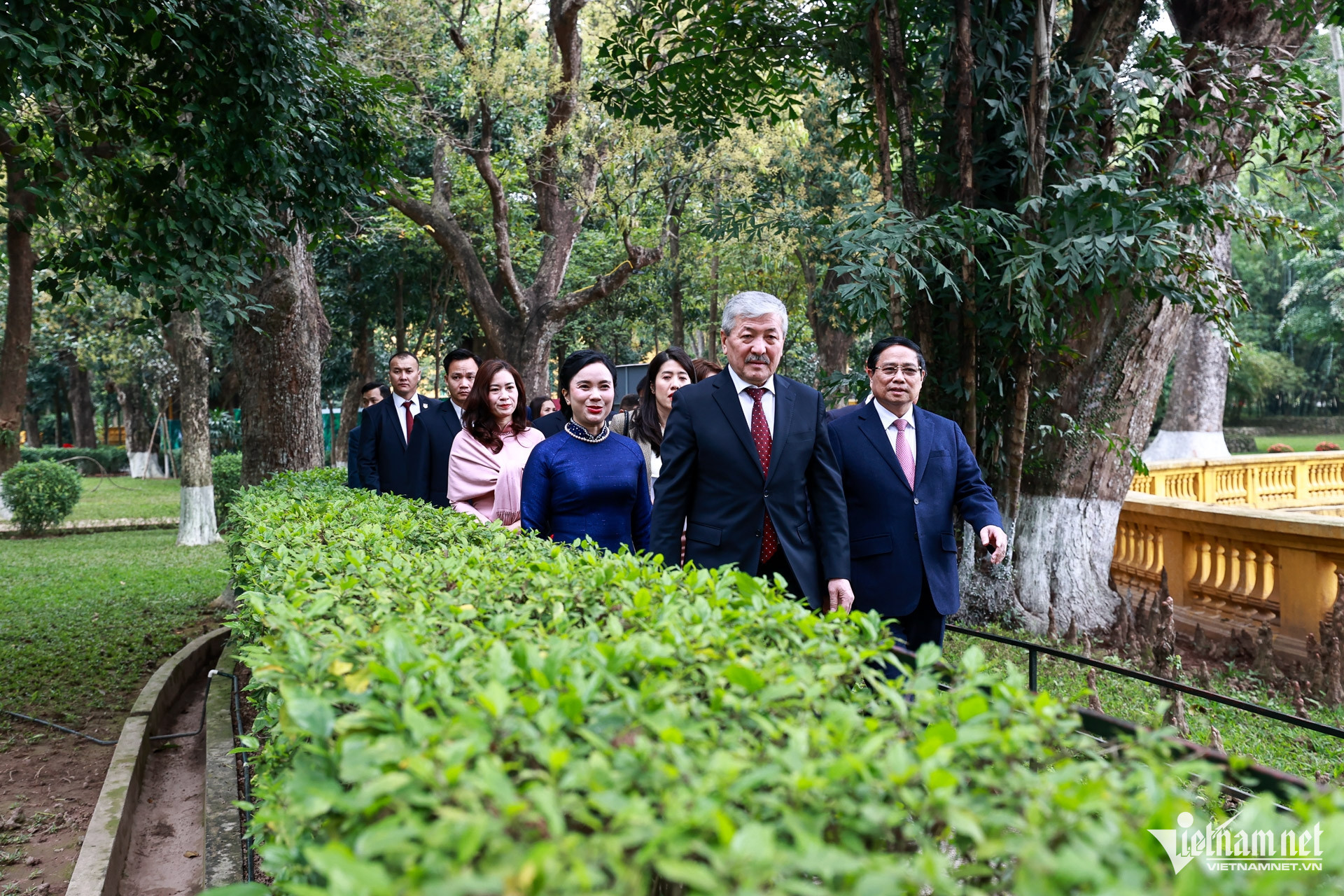
Prime Ministers Pham Minh Chinh and Adylbek Kasymaliev visit the Ho Chi Minh Presidential Site, exploring the historical landmarks where the revered leader lived and worked.
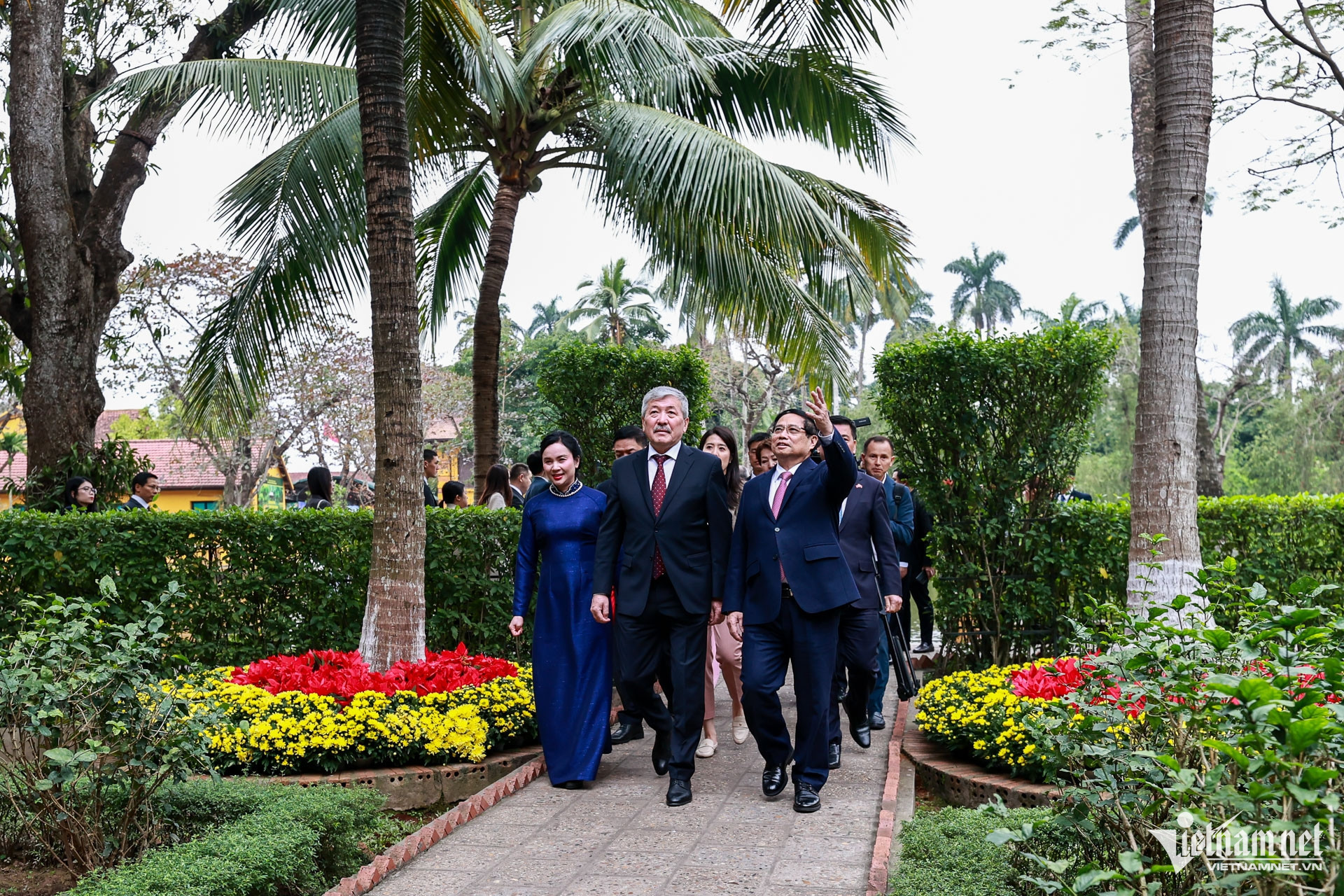
Prime Minister Pham Minh Chinh introduces Prime Minister Adylbek Kasymaliev to the scenic and historically significant surroundings of the Ho Chi Minh Presidential Site.The two leaders tour Ho Chi Minh’s Stilt House, a symbolic site reflecting the simple yet profound lifestyle of Vietnam’s founding leader.
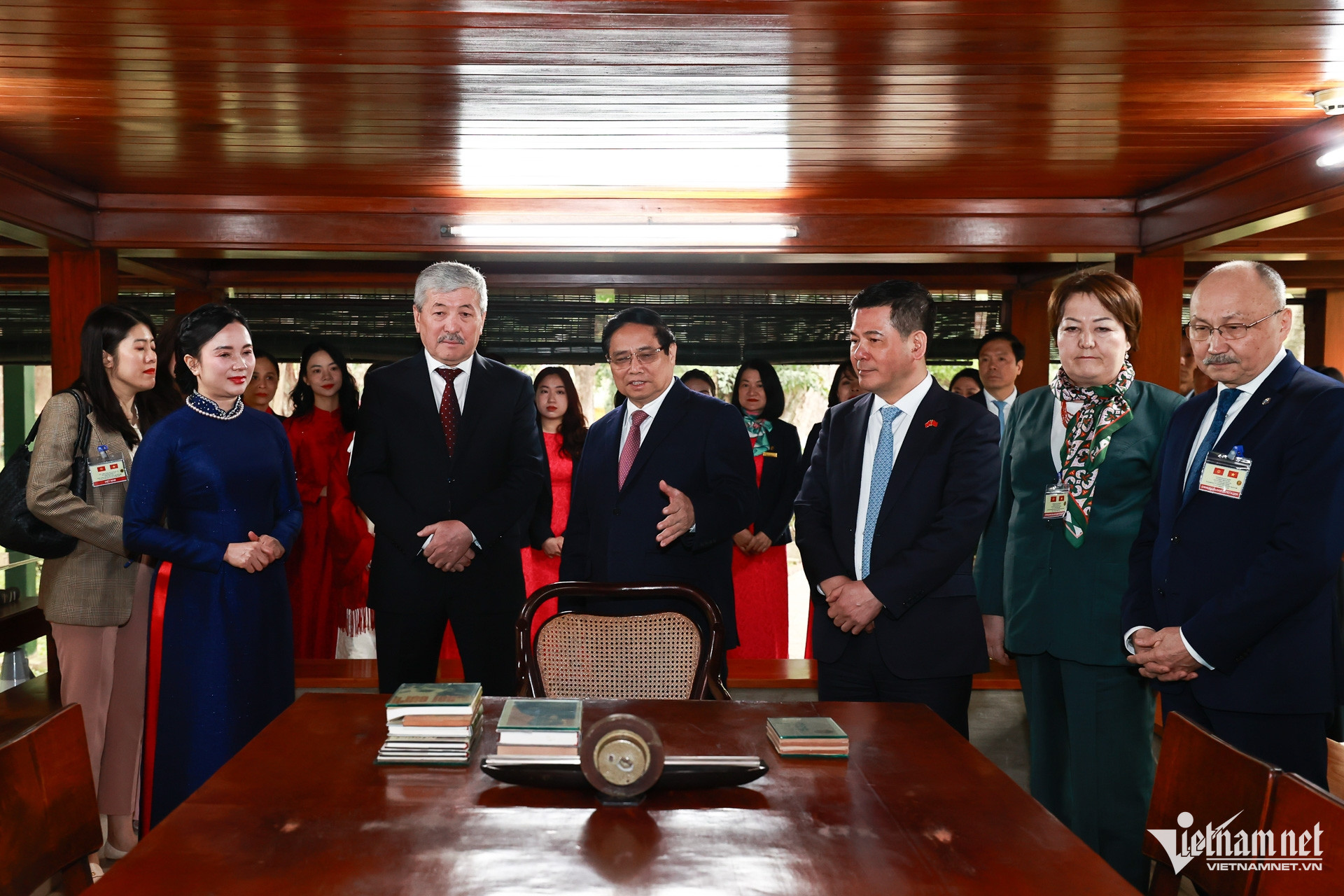
The two leaders tour Ho Chi Minh’s Stilt House, a symbolic site reflecting the simple yet profound lifestyle of Vietnam’s founding leader.

Prime Ministers Pham Minh Chinh and Adylbek Kasymaliev visit Ho Chi Minh’s fish pond, engaging in the traditional act of feeding the fish – a gesture symbolizing peace and prosperity.
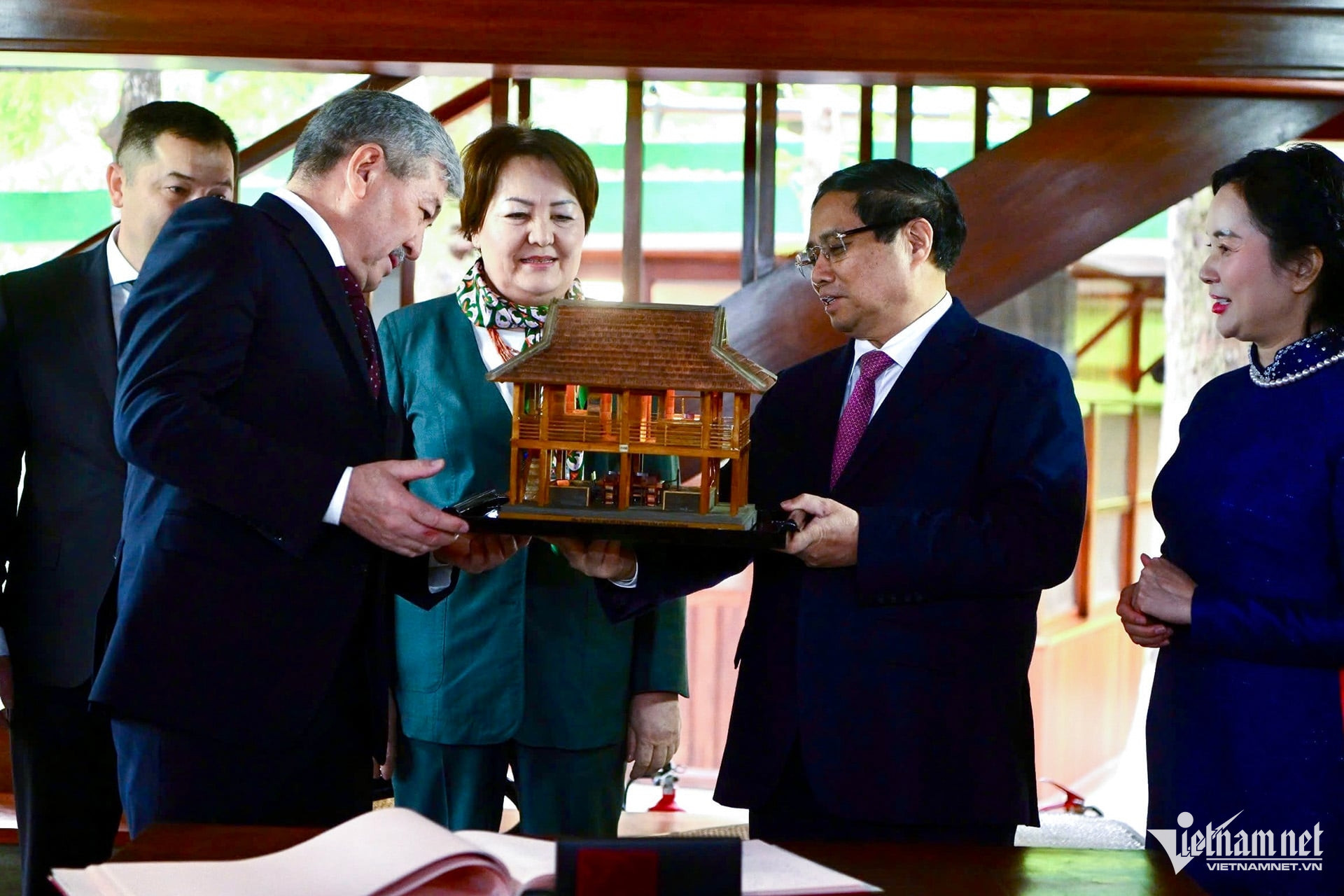
As a token of friendship, Prime Minister Pham Minh Chinh presents his Kyrgyz counterpart with a model of Ho Chi Minh’s Stilt House, commemorating the visit.
In the context of Japan’s ambition to revive its semiconductor industry, Vietnam’s workforce is seen as a solution to the island country’s thirst for human resources.

At a factory in Japan (photo: YKC)
Japan’s semiconductor industry once thrived from the 1970s to the 1990s.
The production value of semiconductors on Kyushu Island alone, dubbed Japan’s “Silicon Island”, once reached a record high of 1,392.4 billion Yen in 2000.
However, the rise of South Korean manufacturers and cyclical market fluctuations caused the Japanese industry to decline steeply.
Against this backdrop, the Japanese government has launched a strategy to revive the semiconductor industry, aiming to boost total domestic semiconductor revenue from 5,000 billion Yen in 2020 to 15,000 billion Yen by 2030.
This strategy is divided into three phases. In the first phase, Japan will secure an advanced semiconductor manufacturing base to serve AI (artificial intelligence) and IoT (Internet of Things) domestically.
In the second phase, Japan will strengthen ties with the US to research next-generation semiconductor technologies. In the third phase, the country will realize and apply future technologies through global cooperation.
In reality, during the first three years of the strategy, starting in 2021, Japan allocated a budget of up to 4,000 billion Yen to support the development of its semiconductor industry.
These investments have begun showing early positive signs as Japan’s semiconductor industry regains its growth.
The production value of semiconductors on Kyushu Island alone reached 1,153.4 billion Yen in 2023, surpassing the 1,000 billion Yen mark for the first time after 16 years.
It is projected that from 2024 to 2030, the Japanese government’s budget for semiconductor industry development will continue to rise, reaching 10,000 billion Yen.
The thirst for workers
According to Ataguchi, a representative of the Kyushu Bureau of Economy, Trade, and Industry (under Japan’s Ministry of Economy, Trade, and Industry), with government support, there is currently a wave of investment in the semiconductor industry in Kyushu.
Surveys indicate that in the next 10 years, Japan’s semiconductor hub will attract equipment-related investments worth up to 6,200 billion Yen.
However, the semiconductor industry’s appeal to Japanese students remains low, compounded by the lack of industry information and practical training facilities.
As a result, Japan’s “Silicon Island” is forecast to face a severe shortage of semiconductor talents in the future.
Japan’s Ministry of Economy, Trade, and Industry predicts that from now until 2032, the semiconductor industry in Kyushu alone will lack approximately 1,000 workers annually in both short and medium terms.
The roles facing increasing shortages include machine operators and production engineers, as well as research and development (R&D) staff.
Amid the demand to grow the semiconductor sector, many Japanese companies, organizations, and educational institutions are working to diversify the industry’s workforce.
This is why many Japanese business delegations have visited Vietnam to explore and assess its semiconductor workforce, seeking collaboration opportunities.
Ataguchi stated that Japanese semiconductor companies need workers with a strong knowledge foundation in the fields of electricity, electronics, information technology, machinery, chemistry, materials, finance, and business.
For those in R&D positions, they need to have programming skills, knowledge of material engineering, and other practical skills and experience.
According to Ishikawa Isamu, Japan’s Deputy Ambassador to Vietnam, the semiconductor industry in the Kyushu region is entering a phase of robust growth. This area accounts for over half of Japan’s total integrated circuit production value.
He believes that collaboration in training human resources between Vietnam and Japan would benefit both sides, as Vietnam boasts a high-quality technical workforce, while Japan has a strongly developed semiconductor industry.
In recent years, Vietnam has collaborated with Japan to develop the semiconductor industry ecosystem and enhance enterprise capabilities through partnerships with Japan’s METI, the Japanese Embassy in Vietnam, and the Japan External Trade Organization (JETRO).
Regarding human resources, the National Innovation Center (NIC) has worked with Hiroshima University to identify and send Vietnamese talents to Japan for training in international bachelor’s programs in semiconductors. Collaborations with Japan have been implemented effectively, with substance, and have delivered significant value. In reality, quite a few Vietnamese engineers are currently participating in semiconductor production lines at factories in Japan.
Vu Quoc Huy, Director of the National Innovation Center, Vietnam is currently one of the countries with the fastest-growing digital economy in Southeast Asia.
Vietnam holds a strategic geopolitical position, possesses a youthful and abundant well educated workforce in technology, and has increasingly modern infrastructure investments, attracting more and more major global technology corporations, particularly in the fields of the semiconductor industry and artificial intelligence.
Binh Minh
Ho Chi Minh City is set to develop eight major transport projects, including highway expansions and new arterial roads, to improve connectivity with Long An and the Mekong Delta.
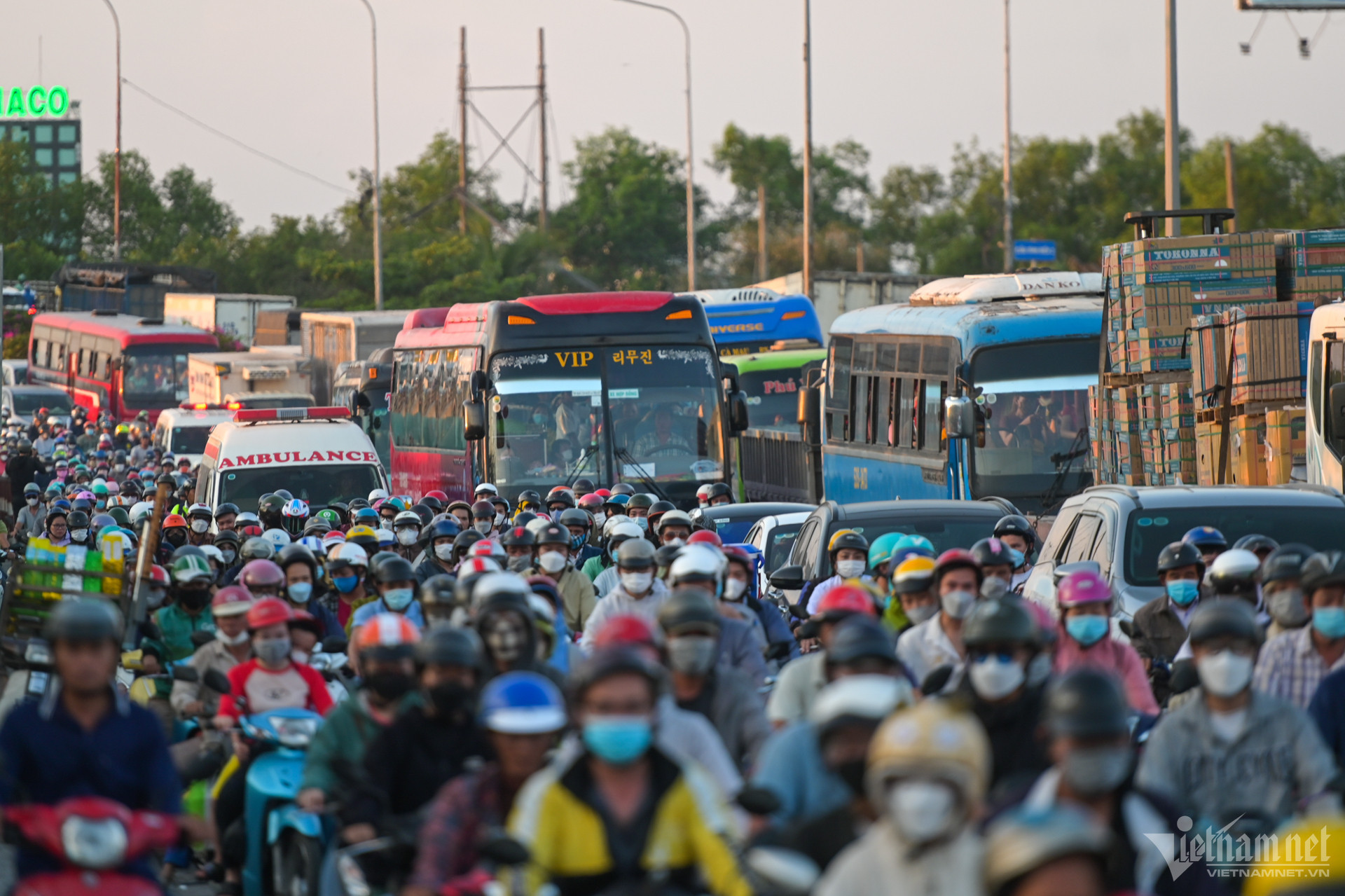
The western gateway of Ho Chi Minh City is often congested due to limited infrastructure. (Photo: Nguyen Hue)
The western and northwestern areas of Ho Chi Minh City, which border Long An Province, are facing increasing congestion due to inadequate transport infrastructure.
To address this issue, the city is launching eight strategic infrastructure projects to improve regional connectivity and facilitate economic growth.
1. Ring Road 4: A key regional corridor
The Ring Road 4 project will span more than 200 kilometers across five provinces and cities: Ba Ria – Vung Tau (18.7 km), Dong Nai (45.6 km), Binh Duong (47.45 km), Ho Chi Minh City (17.3 km), and Long An (78.3 km).
The total estimated investment for the first phase exceeds 127 trillion VND ($5 billion). The 17.3 km section in Ho Chi Minh City will feature four express lanes, including emergency lanes, with a total land clearance of 74.5 meters.
The city’s investment for this segment is estimated at 14 trillion VND ($550 million), including over 7.2 trillion VND from the city budget and 6.8 trillion VND from private investors.
2. National Highway 1 Expansion
A 10-km stretch of National Highway 1, running from Kinh Duong Vuong Street to the Long An border, will be expanded to 60 meters wide with 10-12 lanes.
With an estimated investment of 16.3 trillion VND ($635 million) under the BOT (Build-Operate-Transfer) model, the project includes:
A four-lane flyover at the Kinh Duong Vuong intersection.
Expansion of An Lac Roundabout and Tran Dai Nghia Street.
A four-lane flyover and four-lane underpass at the Binh Thuan interchange.
Construction is set to begin in early 2026, with completion targeted for 2028.
3. National Highway 50B: A new strategic route
Approved by the Prime Minister, National Highway 50B will be nearly 55 km long, connecting Ho Chi Minh City, Long An, and Tien Giang provinces.
Ho Chi Minh City segment: 5.8 km (from Pham Hung Street through Binh Chanh and Nha Be Districts).
Long An segment: 35 km.
Tien Giang segment: 14 km.
The entire project is expected to cost 20 trillion VND ($780 million), with the Ho Chi Minh City section requiring 5.3 trillion VND ($210 million).
Upon completion, National Highway 50B will connect with Ring Road 3, Ring Road 4, and major international transport hubs such as Hiep Phuoc Port, Thi Vai – Cai Mep Deepwater Port, Long An Port, and Long Thanh International Airport.
4. The Northwest Road: A new arterial route
A 9.9 km road will be constructed to connect Ring Road 2 in Ho Chi Minh City to Vinh Loc Industrial Park and Provincial Road 823D in Long An.
Road width: 6-8 lanes.
Estimated investment: 5.2 trillion VND ($200 million), with 3.9 trillion VND ($150 million) allocated for land clearance.
To be developed under a public-private partnership (PPP) model before 2030.
Once completed, this road will significantly reduce traffic congestion and improve connectivity with Ring Roads 2, 3, and 4.
5. Vo Van Kiet Street Extension
Vo Van Kiet Street, a major east-west expressway in Ho Chi Minh City, currently spans 13 km with 6-10 lanes.
The proposed extension will connect to the Hai Son – Tan Do Industrial Park in Duc Hoa, Long An, with a 12.5 km section running through Ho Chi Minh City.
Estimated investment: 5.8 trillion VND ($225 million).
Land clearance costs: 3.1 trillion VND ($120 million).
Feasibility studies are underway, with project implementation expected before 2030.
6. Expansion of Nguyen Van Bua Street
A major expansion of Nguyen Van Bua Street is planned:
Section: Nga Ba Giong to Provincial Road 9.
Estimated investment: 2.4 trillion VND ($95 million).
The project includes two new bridges (Cau Lon and Provincial Road 9 Bridge) and the expansion of the existing Provincial Road 9 Bridge.
Scheduled for completion between 2025 and 2028.
Additional Key Projects
Beyond these six major projects, Ho Chi Minh City is also working on:
Expansion of National Highway 50 (budget: 1.5 trillion VND).
Completion of Ring Road 3.
Future expansion of Le Van Luong Road and Long Hau Road, improving connections between Nha Be District (HCMC) and Can Giuoc District (Long An).
With these projects, Ho Chi Minh City aims to significantly reduce congestion, enhance regional mobility, and support economic growth by improving infrastructure links with Long An and beyond.
Tuan Kiet
Hanoi has approved the expansion of key roads around West Lake and a new bridge connecting Thuy Su Lake to Dam Tri. The project aims to improve urban infrastructure while preserving the lake’s natural beauty.
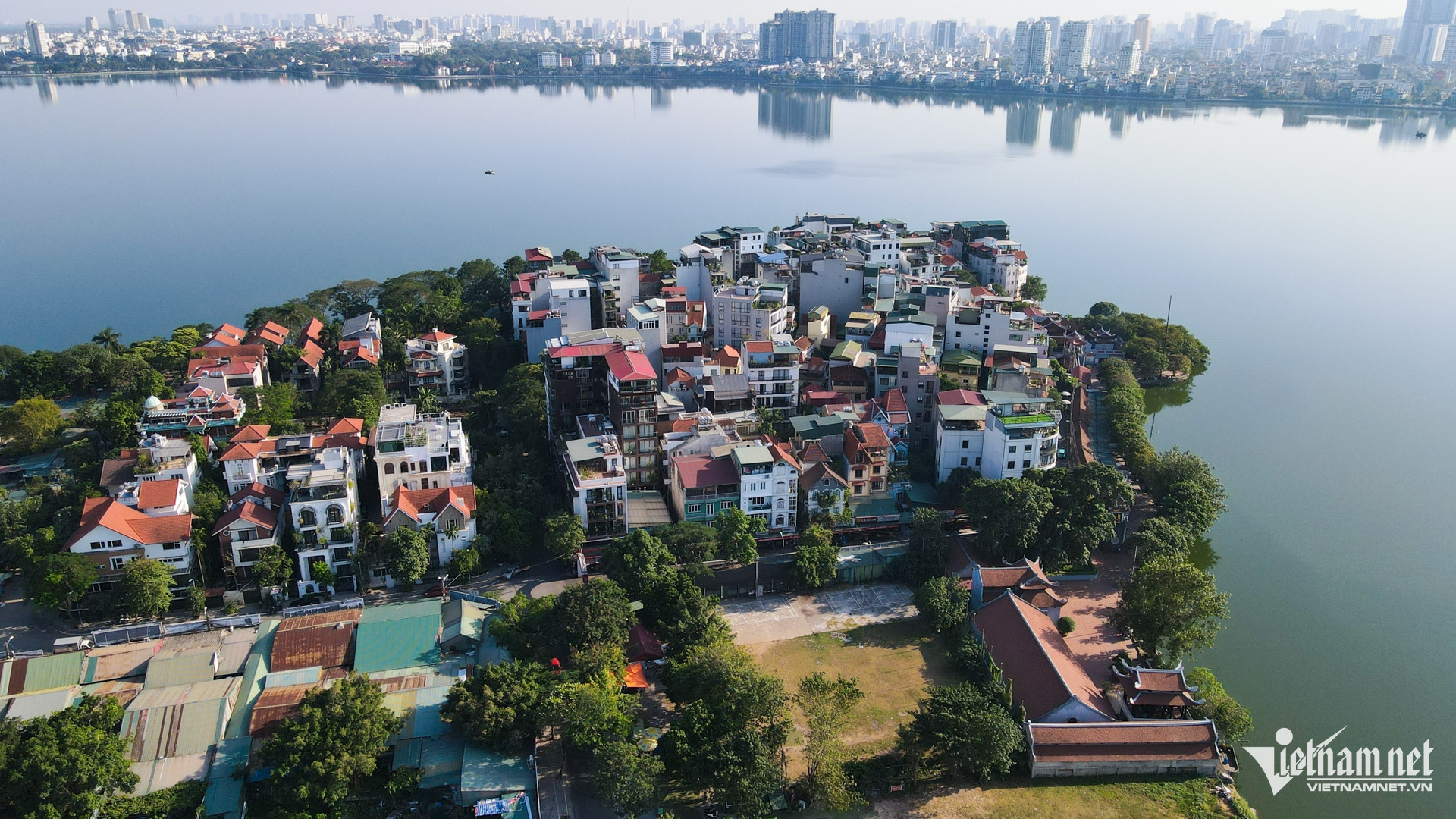
Hanoi has approved plans to expand roads around West Lake. (Photo: Thach Thao)
The Hanoi People’s Committee has approved a proposal to study the expansion of roads surrounding West Lake in Tay Ho District. Additionally, authorities have permitted research into constructing a bridge between Thuy Su Lake and Dam Tri, aiming to improve infrastructure and enhance the scenic landscape.
During a recent meeting on urban upgrades around West Lake, the Hanoi People’s Committee largely agreed with the proposals from Tay Ho District and relevant city departments.
As a result, the city has officially incorporated the West Lake road expansion project into the updated zoning plan for West Lake and surrounding areas.
Urban development around West Lake
Tay Ho District will collaborate with relevant departments to incorporate the proposed road expansions, pedestrian pathways, wharf improvements, and landscape enhancements into the West Lake Conservation and Development Plan.
The study will also explore the construction of a bridge connecting Thuy Su Lake and Dam Tri, ensuring a design that is aesthetically pleasing, compact, and functional while minimizing any impact on the lake environment.
Key road expansion projects
The city has approved the expansion of Quang An Street and Tu Hoa Street, with both roads set to be widened to 21 meters.
Authorities have emphasized that the road expansions must maintain high aesthetic standards and minimize encroachment on the lake’s surface.
The planning and approval process for these projects is expected to be completed within two months.
West Lake: Hanoi’s largest natural lake
West Lake is Hanoi’s largest natural lake, covering approximately 530 hectares with a 15-kilometer circumference. It is believed to be a remnant of an ancient Red River tributary.
According to a 2017 biodiversity survey conducted by Tay Ho District, the lake is home to a rich ecosystem, including 72 species of phytoplankton, 29 species of benthic organisms, 12 crustacean species, and 46 fish species.
These planned upgrades aim to balance urban development, environmental preservation, and enhanced public access to one of Hanoi’s most iconic landmarks.
Quang Phong
A global system error disrupted the March 8 SAT exam in Vietnam, forcing students to stop early. College Board is investigating and will announce a resolution soon.

On the morning of March 8, a sudden system failure disrupted the SAT exam, forcing many test-takers to stop their exams prematurely.
Tran Ha, a parent in Hanoi, whose child took the SAT at Banking Academy, reported that the system abruptly stopped 13 minutes before the scheduled end time. Meanwhile, some test rooms that started earlier were not affected.
“The proctors initially asked students to stay and wait for further instructions, but later told them to go home and wait for an official resolution via email,” she said.
At Hanoi University of Science and Technology, another parent, Thu Hang, shared that the system auto-submitted her child’s test 25 minutes early.
“My child was extremely disappointed because they were doing well. I hope College Board allows students to retake only the affected sections instead of the entire test, as each attempt brings tremendous psychological pressure,” she added.
College Board, the organization that administers the SAT, is currently investigating the issue and working on a solution for affected students.
Meanwhile, IIG Education, the official representative of College Board in Vietnam, confirmed that the issue was caused by a global system error. Test-takers who started before 11:00 AM were not affected, but those who began after 11:00 AM experienced disruptions.
The SAT exam, which includes Reading-Writing and Math sections, is a widely used standardized test for university admissions in the United States, Canada, Australia, Singapore, and other countries. Several universities in Vietnam also accept SAT scores for admissions and direct entry programs.
Thuy Nga


