In the blockchain technology sector, a brand is defined not only by its products and technology, but also by how it builds relationships with the local market and community.

For MEXC Foundation, this forms part of its long-term development approach in Vietnam. Alongside investment activities, ecosystem connectivity, and initiatives to boost digital asset education, MEXC Foundation continues to allocate resources to programmes that create a direct and tangible impact on local communities.

MEXC Foundation expand its community engagement with Mid-Autumn Festival initiatives
Preparing meals for patients at the hospital. Photo courtesy of MEXC Foundation

This Mid-Autumn Festival season, the approach continues through a series of activities at shelters and hospitals in Dong Nai province, including the “Loving Kitchen” and “Mid-Autumn Festival for Children” programmes, which support people in need and children facing difficult circumstances.

What stands out is not the scale of these initiatives, but the way MEXC Foundation chooses to engage: working directly with the community to prepare meals, organise Mid-Autumn Festival activities, and create a meaningful space for children at local shelters.

When community responsibility becomes part of the brand

Through the “Loving Kitchen” initiative, the MEXC Foundation team and volunteers prepared and distributed more than 400 meals at a local hospital, while also providing meals to two shelters.

At Dieu Phap Shelter, MEXC Foundation also joined hands with the community to organise a Mid-Autumn lantern-making workshop for children, alongside preparations for the traditional festive feast, a lantern procession, and gift-giving activities.

MEXC Foundation expand its community engagement with Mid-Autumn Festival initiatives
Mid-Autumn Festival lantern-making workshop for children at Dieu Phap Shelter. Photo courtesy of MEXC Foundation

The two initiatives take different approaches but share the same objective: bringing corporate resources closer to the specific needs of local communities.

This also reflects a distinctive approach to MEXC Foundation’s community initiatives. Rather than treating social responsibility as a series of standalone programmes, the Foundation is gradually building a long-term portfolio of initiatives connected to specific groups and social needs – from children and education to community support during challenging periods.

Staying committed to long-term development in Vietnam

This year’s Mid-Autumn Festival initiatives build on a range of community programmes previously carried out by MEXC Foundation in Vietnam, including initiatives supporting children in remote and mountainous areas, improving learning conditions, and providing community relief.

While investment activities enable MEXC Foundation to connect with projects and people shaping the future of the digital asset ecosystem, community initiatives create another avenue of engagement – one that is closer to everyday life and the practical needs of society.

For MEXC Foundation, its presence in Vietnam is therefore not built solely on its contributions to the technology sector. It is also a long-term process of building relationships with local communities through initiatives with clear objectives and tangible value.

Looking ahead, MEXC Foundation will continue to identify and develop initiatives that respond to the needs of Vietnamese communities, particularly in education, youth development, and ecosystem building. These efforts form an important foundation for the brand to establish a sustainable and meaningful presence.

MEXC empowers Vietnamese youth to drive innovation and creativity MEXC empowers Vietnamese youth to drive innovation and creativity

Global digital asset platform MEXC is ramping up initiatives to inspire and equip Vietnam’s young tech talent for the fast-evolving Web3 era.

Tokenised prospects within a new financial order Tokenised prospects within a new financial order

As one of Southeast Asia’s most dynamic markets, Vietnam is well-positioned to play a bigger role in the region’s digital finance evolution. Dada Zhuang, chief business officer of digital asset group MEXC Vietnam, shared her perspective with VIR’s Vy Vy on trust-building mechanisms and ecosystem priorities needed to elevate Vietnam’s position in the next digital finance wave.

Promoting digital assets initiative in Vietnam Promoting digital assets initiative in Vietnam

A digital asset initiative has been launched with the participation of MEXC, aiming to enhance safety, compliance, and the development of a transparent digital asset ecosystem in Vietnam.

Vietnamese-made Kim Long buses debut in Thailand
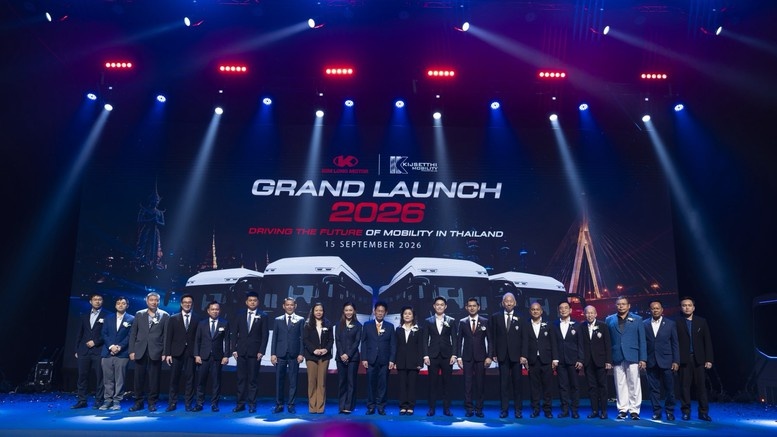
Photo: Kim Long Motor

The launch ceremony took place on September 15 in collaboration with KIJSETTHI Mobility, introducing Kim Long-branded buses to the Thai market.

KIJSETTHI Mobility has been Kim Long Motor’s authorised distributor in Thailand since April with the Thai company taking steps to implement a sales and after-sales service network nationwide since then. Building on Kim Long Motor’s research and development (R&D) and manufacturing capabilities and KIJSETTHI Mobility’s strong understanding of the local market, the two parties aim to establish a professional distribution and service platform, delivering high-quality, operationally optimised transport solutions for Thailand.

In addition, KIJSETTHI Mobility has completed a system of showrooms, authorised service stations, and genuine spare parts warehouses, offering 24/7 technical support and warranty services to ensure peace of mind for customers investing in Kim Long products.

As part of the partnership roadmap, Phase 1 will see the introduction of Kim Long commercial vehicles to the Thai market, developing next-generation EURO 5-compliant internal combustion engine models as well as fully electric vehicles. In parallel, the two companies will strengthen their nationwide distribution and service networks, alongside ongoing customer feedback to further enhance product quality.

In Phase 2, Kim Long Motor will progressively shift from Completely Built-Up exports to local assembly in Thailand, with the aim of achieving a localisation rate of more than 50 per cent. From 2027 to 2030, the company plans to establish Thailand as a strategic manufacturing and export hub for the ASEAN market, helping expand the supply chain, foster supporting industries, and generate employment opportunities for local communities.

Addressing the event, Dao Viet Anh, general director of Kim Long Motor, said, “We are proud to be a pioneer in bringing Vietnamese-branded commercial vehicles to Thailand. As one of ASEAN’s major automotive hubs, Thailand serves as a strategic gateway for Vietnamese-made Kim Long products to prove their engineering, quality, and service capabilities. Alongside KIJSETTHI Mobility, we will continuously refine our operational and after-sales platform. Kim Long aims to become a gateway contributing positively to Vietnam–Thailand economic cooperation.”

At the ceremony, Kim Long Motor introduced bus models developed and produced on automated and digitised production lines. The company maintains autonomy across the value chain, from interior and exterior components to the chassis, body, engine, battery, and electrical systems. Consequently, the localisation rate for Kim Long diesel buses has reached 90 per cent, while pure electric vehicles stand at 60 per cent, with a target of reaching 90 per cent by late 2026.

Designed for the Thai market, the launched models prioritise performance, safety, and passenger comfort across flexible configurations. The 12-metre KIMLONG99 series offers seating for 42 to 44 passengers and is suited to inter-provincial travel, while the compact 7.9-m KIMLONG19-N21 features a 21-seat layout designed for urban transit, short-haul routes, and high-frequency shuttle services.

Vietnamese-made Kim Long buses debut in Thailand
Photo: Kim Long Motor

All models feature spacious interiors with premium leather seats, integrated USB charging ports (Type A and Type C), refrigerators, and high-capacity air conditioning systems with individual vents for each seat. For safety, flexible internal, and external camera systems assist drivers, while international-standard emergency exits enable proactive emergency response.

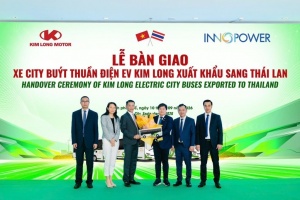
A major highlight is the powerful YUCHAI K11 engine, offering fuel efficiency (19–21 litres per 100 km) to optimise operating costs. On this occasion, Kim Long Motor and KIJSETTHI Mobility handed over the first batch of KIM LONG buses to Thai customers.

Chalakorn Setthabunnatat, general director of KIJSETTHI Mobility, said, “We are delighted that our collaboration has resulted in the official launch of KIM LONG buses – well-invested in design, amenities, and superior performance – to Thai customers. We highly appreciate KIM LONG Motor’s R&D capabilities and product optimisation for local transit needs. I am confident that our nationwide network will enable KIJSETTHI Mobility to partner long-term with Kim Long Motor in creating comprehensive transport solutions for Thailand.”

At the event, KIJSETTHI Mobility secured an immediate order for 50 Kim Long buses.

Taking place on the occasion of the 50th anniversary of Vietnam-Thailand diplomatic relations, the launch reflects the deepening spirit of cooperation between the two countries. It also affirms the capacity of Vietnamese enterprises to pursue international economic integration and advance national industrial development strategies.

From Kim Long buses entering Thailand’s roads to the strategic vision of joint production and ASEAN-wide expansion, Kim Long Motor and KIJSETTHI Mobility are steadily building a sustainable growth strategy and opening a new chapter for the region’s automobile industry.

Kim Long Motor ships first batch of electric buses to Thailand Kim Long Motor ships first batch of electric buses to Thailand

Kim Long Motor Hue has completed the handover of nine fully electric buses to Thailand’s INNOPOWER, the first batch in a contract for 113 vehicles.

Kim Long Motor pioneering fuel-efficient engines and green transition Kim Long Motor pioneering fuel-efficient engines and green transition

Recent geopolitical tensions in the Middle East have continued to raise risks for the global energy market, with diesel prices rising sharply and unpredictably, placing pressure on fuel-intensive sectors such as long-distance passenger transport.

Kim Long Motor exports first buses to Thailand in regional push Kim Long Motor exports first buses to Thailand in regional push

Kim Long Motor has exported its first batch of locally manufactured buses to Thailand, marking a significant step in the company’s international expansion strategy.

On September 14, ACCA held a ceremony to mark its 25th anniversary in Vietnam, bringing together representatives from regulatory authorities, professional bodies, businesses, partners, experts, and the ACCA community to reflect on its journey of supporting the development and integration of Vietnam’s accounting, auditing and finance professions, as well as the business community.

At the event, ACCA reaffirmed its commitment to contributing to Vietnam’s development, expressing appreciation to its partners, members and students, while also setting out new directions for collaboration in response to rapid changes in technology, ESG and sustainability requirements.

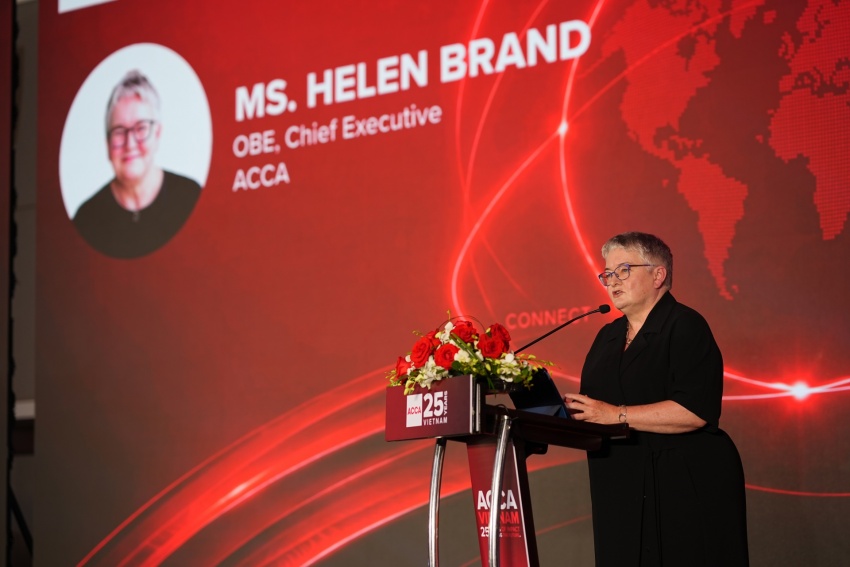
Speaking at the event, Helen Brand, ACCA’s chief executive, expressed her appreciation to the State Audit Office of Vietnam (SAV), the Ministry of Finance, strategic partners, and the ACCA community in Vietnam.

“We want to continue working alongside all of you to build a sustainable and prosperous economy that benefits all people in Vietnam. ACCA is ready to play an active role in supporting economic growth, developing a highly skilled workforce, and helping realise Vietnam’s ambition of becoming a competitive international financial centre,” said Brand.

ACCA marks 25 years in Vietnam
Helen Brand, ACCA’s chief executive. Photo: ACCA Vietnam

Ha Thi My Dung, deputy state auditor general of SAV, delivered remarks congratulating ACCA Vietnam on its 25th anniversary and stated that the SAV has always regarded ACCA as one of its important partners.

“I am confident that ACCA will continue to build on its role, reputation and international experience and make an even greater contribution to the development of Vietnam’s professional community,” Dung said. “From the SAV’s side, we look forward to continuing our close cooperation with ACCA, strengthening the sharing of international experience and knowledge; enhancing cooperation in training and human resource development; exchanging views on innovation in audit methodologies and the application of technology and AI; and encouraging professional activities aligned with new requirements for public financial management and sustainable development.”

25 years

ACCA’s story in Vietnam began in 2001 with just 11 members. Today, ACCA has more than 1,300 members across the country and more than 7,000 students on their journey towards becoming ACCA members.

Behind these figures is a dynamic and growing community present across every sector of the economy, taking on critical roles ranging from accounting, auditing and finance to governance, strategy and sustainability.

This growth has been driven by extensive cooperation between ACCA and regulatory authorities, professional bodies, businesses, and educational institutions in Vietnam and around the world. At the same time, ACCA has promoted a range of initiatives to strengthen professional capabilities and expand opportunities for Vietnam’s finance professionals to access global standards and the international finance community.

Beyond professional development, ACCA has also established itself as a pioneering organisation in Vietnam, making significant contributions to policy dialogue and discussions on governance, strategy, environmental, social, and governance (ESG), sustainability reporting and issues directly affecting business operations.

Through its network of experts and corporate partners across 179 countries, ACCA promotes the sharing of international knowledge and best practices, helping organisations strengthen their financial and governance capabilities while preparing finance professionals for the evolving demands of business.

In particular, as the finance function increasingly shifts from a focus on reporting and control towards strategic planning and value creation, ACCA continues to equip professionals with the capabilities to take on roles extending beyond traditional finance, including risk management and strategy, as well as ESG, sustainability and transformation.

ACCA’s 25-year journey in Vietnam has unfolded alongside the professionalisation, integration and transformation of the economy. Building on this foundation, ACCA said that they would continue working to connect Vietnam with the global professional community, boost international standards, and support the development of a finance workforce capable of creating value for the economy and global markets.

ACCA marks 25 years in Vietnam
ACCA Vietnam: 25 Years of Impact, Shaping the Future. Photo: ACCA Vietnam

Amid shared challenges such as climate change, the emergence of new technologies such as AI, and growing demands for transparency, the role of the accounting, auditing and finance community continues to expand significantly. For ACCA, these shifts require professionals not only to keep their technical knowledge up to date, but also to strengthen their adaptability, strategic thinking and ability to create value.

“This remains a key focus of ACCA’s direction in Vietnam in the next phase: continuing to connect Vietnam’s professional community with global standards, knowledge and opportunities,” said Brand.

“Perhaps the world has never needed the capabilities and qualities of professional accountants more than it does today,” she added. “However, we believe that professional accountants equipped with the right knowledge, skills and qualities can help organisations and countries overcome these challenges.”

The 25th anniversary, therefore, is not only an occasion for the ACCA community to celebrate what has been built over the past quarter-century. It also provides a foundation for ACCA to continue working alongside Vietnam in building a dynamic, sustainable and prosperous economy.

ACCA marks 25 years in Vietnam

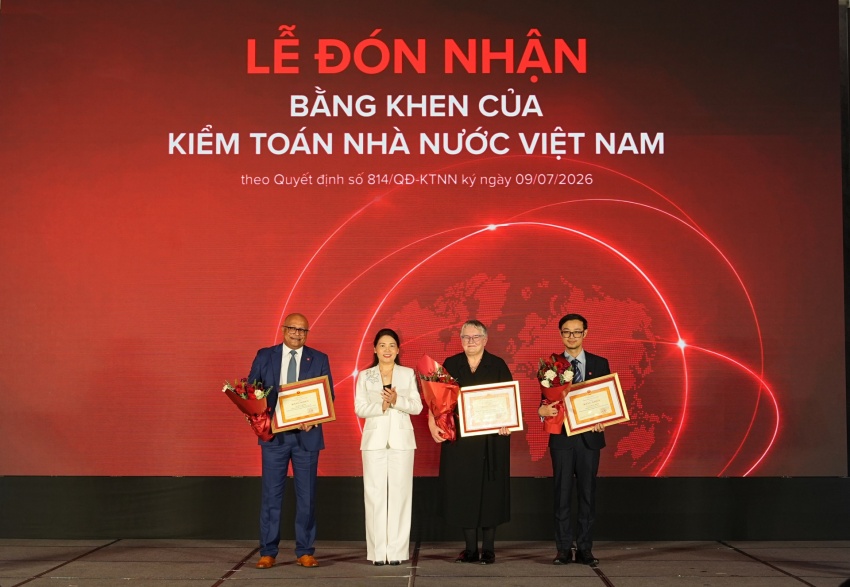
At the event, ACCA was honoured to receive Certificates of Merit and Letters of Commendation for its collective and individual contributions from the State Audit Office of Vietnam on July 9.

The recognition reflects ACCA’s contributions throughout its cooperation with the State Audit Office of Vietnam and marks a meaningful milestone in the cooperative and friendly relationship between the two organisations.

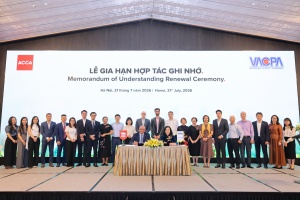
ACCA and VACPA deepen partnership to support Vietnam's green finance transition ACCA and VACPA deepen partnership to support Vietnam’s green finance transition

The renewal of the MoU between ACCA Vietnam and the VACPA marks not only a new chapter in their long-standing partnership, but also a shared commitment to build a transparent, sustainable financial ecosystem and address the growing risk of greenwashing.

Building trust is vital for green finance transition Building trust is vital for green finance transition

Vietnam has taken an important policy step with its Green Taxonomy, but stronger professional judgement will be required across the financial ecosystem. Talking to VIR’s Hazy Tran, To Quoc Hung, country manager of ACCA Vietnam, said that Vietnamese businesses need to move beyond a compliance-driven approach by building a reliable data foundation.

Institutional reform does not create competitiveness overnight, but it can build the confidence businesses need to make long-term investments.

More than three decades of development among Vietnamese private enterprises shows that as the business environment becomes increasingly transparent, the private sector gains greater room to build its internal capabilities, invest for the long term and gradually strengthen its competitiveness.

If fair rules in sport motivate athletes to continually push beyond their limits, a healthy competitive business environment similarly gives companies the confidence to invest in technology, innovation and long-term strategies.

Through policy recommendations submitted to the government over the years, Vietnam’s private business community has shown that what it needs is not preferential treatment or privileges, but a transparent, stable and consistent business environment where every player can grow on the strength of its own capabilities.

“Businesses do not need preferential treatment; they need a stable, predictable, transparent and fair environment; they need their business and property rights to be protected; they need streamlined administrative procedures and a consistent policy implementation system from the central to local levels. Reform only truly matters when it delivers tangible results,” said Nguyen Duy Hung, member of the Board of Directors at Tan Hiep Phat Beverage Group, one of the leading fast-moving consumer goods (FMCG) businesses in the country.

Established in 1994, just a few years after the Law on Enterprises expanded the space for the private sector, Tan Hiep Phat was among the businesses that came of age alongside the country’s reform drive. More than three decades later, Tan Hiep Phat has become the only Vietnamese firm among the top five leading beverage companies in Vietnam.

The journey of companies such as Tan Hiep Phat, therefore, serves as a reflection of the relationship between the business environment and the process of building internal capabilities within the private sector.

Hung uses the metaphor of “where the soil is fertile, birds will come to nest”: when confidence is strengthened, “flows of knowledge, talent, technology and legitimate aspirations for prosperity will naturally find their way in.”

From reform to resilience: How Vietnamese businesses build long-term strength (PR)
Nguyen Duy Hung, member of the Board of Directors at Tan Hiep Phat. Photos: Tan Hiep Phat Beverage Group

But reform only creates the space for development. Opportunities become competitive advantages only when businesses have the determination to invest in capabilities that form a lasting foundation.

Building internal strength through manufacturing and technology

According to the Vietnam Private Economy Report and Provincial Competitiveness Index 2025, Vietnam’s private economic sector currently provides jobs for approximately 26 million people, equivalent to 50.2 per cent of total employment nationwide.

Behind this scale lies the production capacity accumulated over many years by millions of businesses, with leading companies playing an important role in shaping supply chains, creating jobs and generating spillover effects across other parts of the economy.

According to Nguyen Van Viet, chairman of the Vietnam Beer – Alcohol – Beverage Association (VBA), persistent investment in modern production technologies and quality control in line with international standards not only enables businesses to provide consumers with quality products at reasonable prices, but also helps raise standards across the beverage industry and strengthen the competitiveness of domestic companies.

From reform to resilience: How Vietnamese businesses build long-term strength (PR)
When a manufacturing company makes long-term investments, the value it creates extends beyond the company itself, spreading throughout the wider ecosystem

Tan Hiep Phat is an example of this process of accumulation. Nearly two decades ago, when most of the market was still using conventional filling technology, the company chose to invest in an Aseptic filling system from Germany – a technology requiring substantial investment and stringent operating standards.

Aseptic technology enables the product and packaging to be sterilised separately before filling in a sterile environment, helping control product quality and safety without the use of preservatives to extend shelf life.

From reform to resilience: How Vietnamese businesses build long-term strength (PR)
Aseptic filling technology requires stringent technical operation and a long payback period

This was not simply a technology decision, but a decision to invest in long-term capabilities. The substantial investment required, stringent technical operating requirements and longer payback period made it far from an easy choice.

In return, Aseptic technology has become one of the key foundations that have enabled Tan Hiep Phat to build its manufacturing capabilities and develop its core products over the years.

More importantly, the company did not stop at adopting the technology. Through continuous operation and improvement, Tan Hiep Phat has gradually built up its capabilities, mastered the technology and worked with international partners to develop solutions better suited to Vietnam’s climate, raw materials and consumer needs.

Over more than 30 years, the company has continuously reinvested in its production capabilities, gradually building a system of four manufacturing clusters in the country’s key economic regions – Ninh Binh, Danang, Ho Chi Minh City and Can Tho – with 12 Aseptic filling lines and total investment exceeding $300 million.

The company has also brought its products to demanding markets such as France, the Netherlands, Australia and Canada by meeting globally-recognised standards including the Food and Drug Administration, Halal, ISO and HACCP.

These figures reflect more than the scale of investment. More importantly, they represent a decades-long process of building capabilities – a process that is still ongoing at Tan Hiep Phat.

In 2025, the company decided to invest an additional $100 million in next-generation production lines to enhance its manufacturing capacity and meet growing market demand. As the company has expanded, so have tens of thousands of partners across its supply chain matured and grown alongside it.

Seen through this lens, Tan Hiep Phat is more than simply a beverage company. Behind every bottle of Zero Degree Green Tea, Dr Thanh Herbal Tea or Number 1 Energy Drink lies an extensive economic ecosystem spanning farmers in raw-material growing regions, packaging companies, logistics providers and technology partners, through to distributors and retailers across the country.

This is also how the capabilities of individual businesses are transformed into the capabilities of an entire industry. And as more Vietnamese companies choose to invest in capabilities rather than pursue short-term growth alone, today’s private-sector investments will become part of Vietnam’s comprehensive productive capacity and economic competitiveness in the future.

Tan Hiep Phat joins efforts to care for children Tan Hiep Phat joins efforts to care for children

In the course of its business, southern beverage major Tan Hiep Phat is also diligently caring for children, striving to be always of good service to society.

Tan Hiep Phat: a 30-year journey of sustainable development Tan Hiep Phat: a 30-year journey of sustainable development

In early October, Tan Hiep Phat, Vietnam’s leading beverage manufacturer, in collaboration with the Red Cross Society of Hau Giang Province, awarded 200 scholarships, each worth VND1 million ($39.54) to disadvantaged students.

Tan Hiep Phat awards 200 scholarships to disadvantaged students in Binh Duong Tan Hiep Phat awards 200 scholarships to disadvantaged students in Binh Duong

On October 28, Tan Hiep Phat, Vietnam’s leading beverage manufacturer, joined forces with Binh Duong Youth Union to award 200 scholarships to underprivileged students.

Tan Hiep Phat - 30 years of perseverance and breakthroughs Tan Hiep Phat – 30 years of perseverance and breakthroughs

Overcoming challenges, many beverage businesses have affirmed their breakthrough with synergy coming from a chain of links that have been persistently built over decades.

Customs Law amended to advance digital and smart customs
Deputy Minister of Finance Le Tan Can. Photo: chinhphu.vn

On September 10, the Office of the State President held a press conference to announce presidential orders promulgating laws passed by the 16th National Assembly at its first extraordinary session, including the amended Customs Law, which is Law No.11/2026/QH16, passed by the National Assembly on August 23, and will take effect on March 1, 2027.

Deputy Minister of Finance Le Tan Can said that the Customs Law has been amended five times. However, further amendments were considered necessary to redesign customs procedures, develop digital and smart customs systems, strengthen customs management, facilitate trade, and ensure consistency with international rules and related legislation.

The amended law provides a legal basis for redesigning customs management processes, restructuring IT systems, and strengthening interconnected data sharing among ministries, sectors, and local authorities. It also promotes administrative reform and reduces procedural costs, expands decentralisation and delegation of authority to local customs authorities, and encourages voluntary compliance based on taxpayers’ and customs declarants’ levels of legal compliance and risk.

A key focus of the amended law is to simplify administrative procedures and advance digital customs. Customs procedures will be streamlined through revised regulations on customs dossiers, the National Single Window, risk and compliance management, and customs dossier inspections.

The law removes conditions applicable to customs procedure agents and their employees to align with the Law on Investment – No.143/2025/QH15.

It also extends the permitted storage periods for goods kept in bonded warehouses, duty-free goods business locations, and cargo consolidation points, while removing the requirement to apply for extensions. For bonded warehouses and cargo consolidation points, businesses will face fewer reporting requirements, while IT will play a greater role in management.

Inspection and supervision procedures for goods transported under customs supervision will also be simplified. Customs declarants will only need to notify customs authorities, instead of registering the shipment and waiting for customs approval.

The amended law also revises provisions on supplementary customs declarations and authorises the Minister of Finance (MoF) to issue detailed regulations on this matter. The MoF will also be empowered to decide on other special cases eligible for exemption from physical inspection of goods.

The MoF will issue detailed regulations on customs procedures, inspection and supervision for goods exported to or imported through postal and express delivery services.

To reflect actual customs management practices and ensure consistency with relevant legislation, the law adds Article 16a on customs inspection and supervision of goods exported to and imported through e-commerce platforms.

The provision provides a comprehensive legal basis for customs management of goods traded through e-commerce platforms while facilitating cross-border e-commerce activities.

The law also introduces the concept of “duty-free goods business locations” and revises the definitions of “bonded warehouses” and “customs declarants” to reflect commercial practices and align with the Law on E-commerce, the Law on Postal Services and other relevant legislation.

The locations where bonded warehouses, cargo consolidation points, and areas for the gathering, inspection, and supervision of imported and exported goods can be established will be expanded to include free trade zones, logistics centres, concentrated digital technology zones, and industrial clusters.

The amended law also introduces rights and obligations for duty-free goods businesses and responsibilities for competent agencies, organisations, and individuals involved in planning and construction design related to free trade zones.

Another new provision assigns warehouse, yard, and port operators’ responsibility for destroying abandoned goods that cause environmental pollution.

To strengthen inspection and efforts to combat smuggling and trade fraud, the amended law gives customs authorities the power to proactively suspend transit goods where there are clear grounds to suspect that the goods infringe intellectual property rights.

Consistent with this provision, the Law on Intellectual Property has also been amended to empower customs authorities to proactively suspend transit goods suspected of being counterfeit or otherwise infringing intellectual property rights.

The amended law also revises the principles governing post-clearance audits. The time limit for such audits and extensions has been changed from “10 working days” to “no more than 20 days”, with the government tasked with providing detailed regulations on related matters.

Regulations on goods classification codes under lists of goods subject to import and export licences, conditions, and specialised inspection requirements have also been revised to ensure consistency with the commodity codes in Vietnam’s import and export goods classification.

In addition, the law classifies transhipment goods as goods transported under customs supervision. It revises the responsibilities of customs authorities in collecting taxes and other payments to ensure consistency with the Law on Tax Administration, amends regulations on customs valuation of exported goods, and removes provisions concerning tax-suspension warehouses.

The amended law also revises several provisions of the Law on the Organisation of Criminal Investigation Bodies, the Criminal Procedure Code, and the Law on Handling Administrative Violations to ensure consistency with the titles, functions, and responsibilities under the current organisational structure of state agencies.

Photo:
Photo: Ministry of Agriculture and Environment

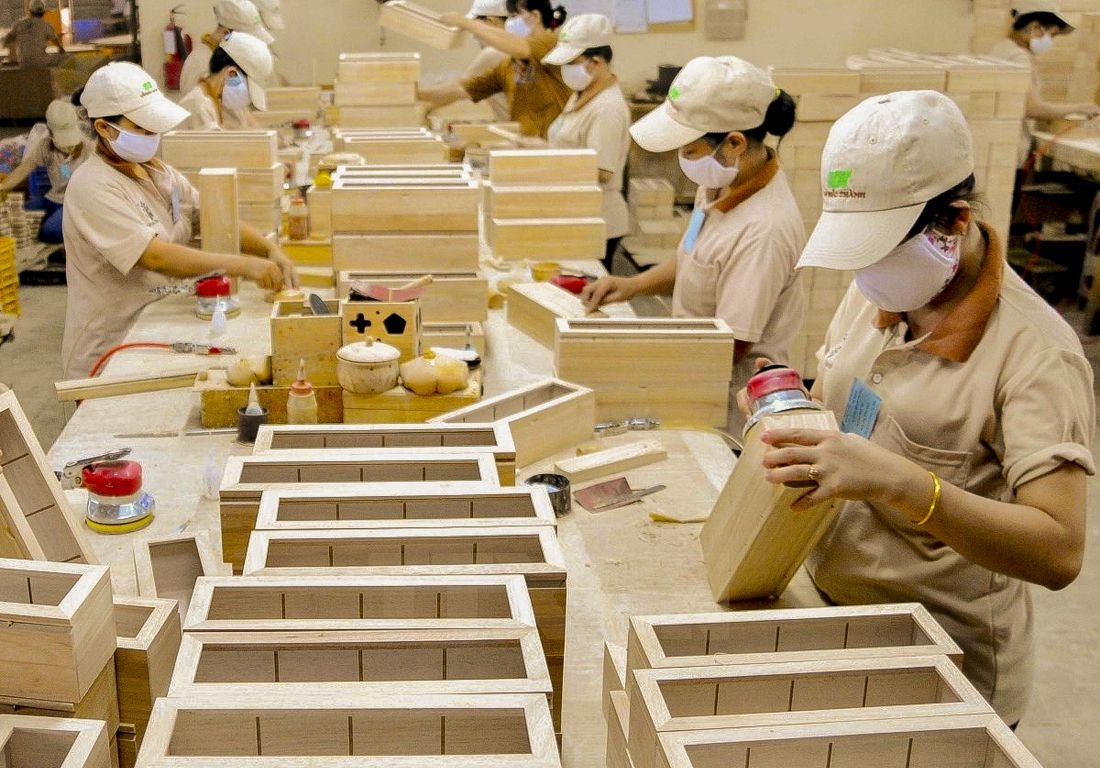
According to a September 8 report from the Ministry of Agriculture and Environment (MAE), exports were estimated at $1.48 billion in August alone, bringing the eight-month total to $11.69 billion. Wood and wood products recorded the highest export value among Vietnam’s agricultural commodities during the period.

The United States remained Vietnam’s largest export market, accounting for 49.9 per cent of total wood and wood product exports. In effect, nearly $1 of every $2 earned from the sector came from the US market.

China, meanwhile, has rapidly expanded its purchases. Vietnam’s wood and wood product exports to China reached $1.54 billion, up 46.4 per cent on-year, lifting China’s share to 15 per cent, 4.2 percentage points higher than a year earlier.

China has therefore overtaken Japan to become Vietnam’s second-largest market for wood and wood products.

Exports to Japan, Malaysia, the Netherlands, Germany and the UK also recorded solid growth, pointing to improving demand across several Asian and European markets and creating opportunities for Vietnamese exporters to broaden their customer base.

Mexico posted the strongest growth among Vietnam’s 15 largest wood export markets, with export value more than doubling on-year. India, by contrast, recorded the sharpest decline, with exports falling 30.3 per cent.

The changing market picture highlights the need for Vietnam’s wood industry to maintain its established markets while accelerating diversification to reduce reliance on a small number of destinations.

According to the Ministry of Industry and Trade’s Foreign Trade Agency, exports to the US are facing greater pressure as Washington steps up trade defence measures.

On July 16, the US Department of Commerce announced its final determinations in the anti-dumping and countervailing duty investigations into hardwood plywood and decorative plywood from Vietnam, imposing a general anti-dumping duty rate of 84.95 per cent.

Although the final rate was significantly lower than the preliminary range of 196-199 per cent, the agency said it still represents a major barrier for Vietnamese exporters.

Vietnam’s wood industry has established a strong position in the US, becoming an important supplier as American importers diversify their furniture supply chains. However, the impact of higher trade costs is already becoming visible.

US importers are becoming more cautious about signing long-term contracts, shortening order cycles and seeking greater cost-sharing from suppliers, potentially putting further pressure on exporters’ margins.

The bigger risk is that Vietnamese suppliers could gradually lose their position in US supply chains. Once importers shift to alternative sources and establish new inspection, logistics and product-standard systems, regaining market share could become considerably more difficult.

For Vietnamese wood exporters, maintaining customer confidence in the US market is therefore becoming more important than retaining orders at any cost, according to an industry expert.

The MAE is working with wood industry associations to help businesses respond to US anti-dumping and countervailing duty investigations, including the hardwood plywood case, as well as participate in the Section 301 investigation hearings.

The ministry is also proposing measures to address VAT-related difficulties in wood exports to provide timely support for businesses.

Wood exports reach $12.4 billion in first nine months High inflation dragging down Vietnamese wood exports External threats persist for economy Large inventories stifling wood production objectives Wood manufacturers on alert for unpredictable new year prospects Vietnam wood exports break barriers to exceed targets Vietnam’s wood exports surpass $17 billion

The partnership aims to tap into the growing global market for simple, intuitive titles that retain users over the long term through accessible gameplay and lasting entertainment value. Capturing this trend, Skylink Studio, a Vietnam-based tech company, has focused its resources on researching and publishing a diverse portfolio aimed squarely at the international market.

Skylink Studio secures up to $12 million funding facility from PvX Partners for global outreach (PR)
Photo: Skylink Studio

The company’s flagship titles – Tile Pyramid, Tile Bloom, Tiles 2D, Tile Candy, Ocean Tiles and Snake Go – are all built around data optimisation, applied technology, and game-design capability to achieve growth at scale.

Alongside its core Tile Match line up, the company is also expanding into new genres such as Jigsawart and Way Escape to explore new long-term opportunities.

In today’s mobile gaming industry, creating a good product only decides part of the outcome. To reach millions of players at a global scale, studios must have distribution capability, run disciplined User Acquisition campaigns, and be able to continuously reinvest in products with proven potential.

Skylink Studio partners with PvX to boost Vietnamese mobile games globally
Typical titles in Skylink Studio’s classic game lineup, such as Tile Pyramid, Jigsawart, and Way Escape. Photo: Skylink Studio

To strengthen its international distribution capability, on August 22 Skylink Studio has entered into a growth-financing arrangement through PvX, a user acquisition financing platform for gaming and consumer apps.

Under the arrangement, PvX Partners has committed to provide Skylink Studio with access to a growth financing of up to $12 million. The company expects to use the facility to support User Acquisition, commercial scaling of its existing products, and continued development of its new game portfolio for global markets.

The collaboration with PvX is set to give Skylink Studio more flexibility to pursue market opportunities with a long-term, sustainable development strategy.

This large-scale financing deal is more than a commercial springboard – it affirms the data-driven operating capability of Vietnam’s engineering and tech talent. The model of combining domestic production capability with an international distribution system is becoming a strategic direction that gives local tech companies the confidence to compete fairly on the global stage.

Speaking about the company’s development direction, Nguyen Ngoc Tuan Loi, founder and CEO of Skylink Studio, said, “Our ambition isn’t just to create a few successful games. Skylink wants to build a global gaming company from Vietnam – one with the capacity to continuously create, develop and bring quality products to players around the world. This collaboration with PvX is an important step that helps us accelerate that journey.”

Skylink Studio partners with PvX to boost Vietnamese mobile games globally
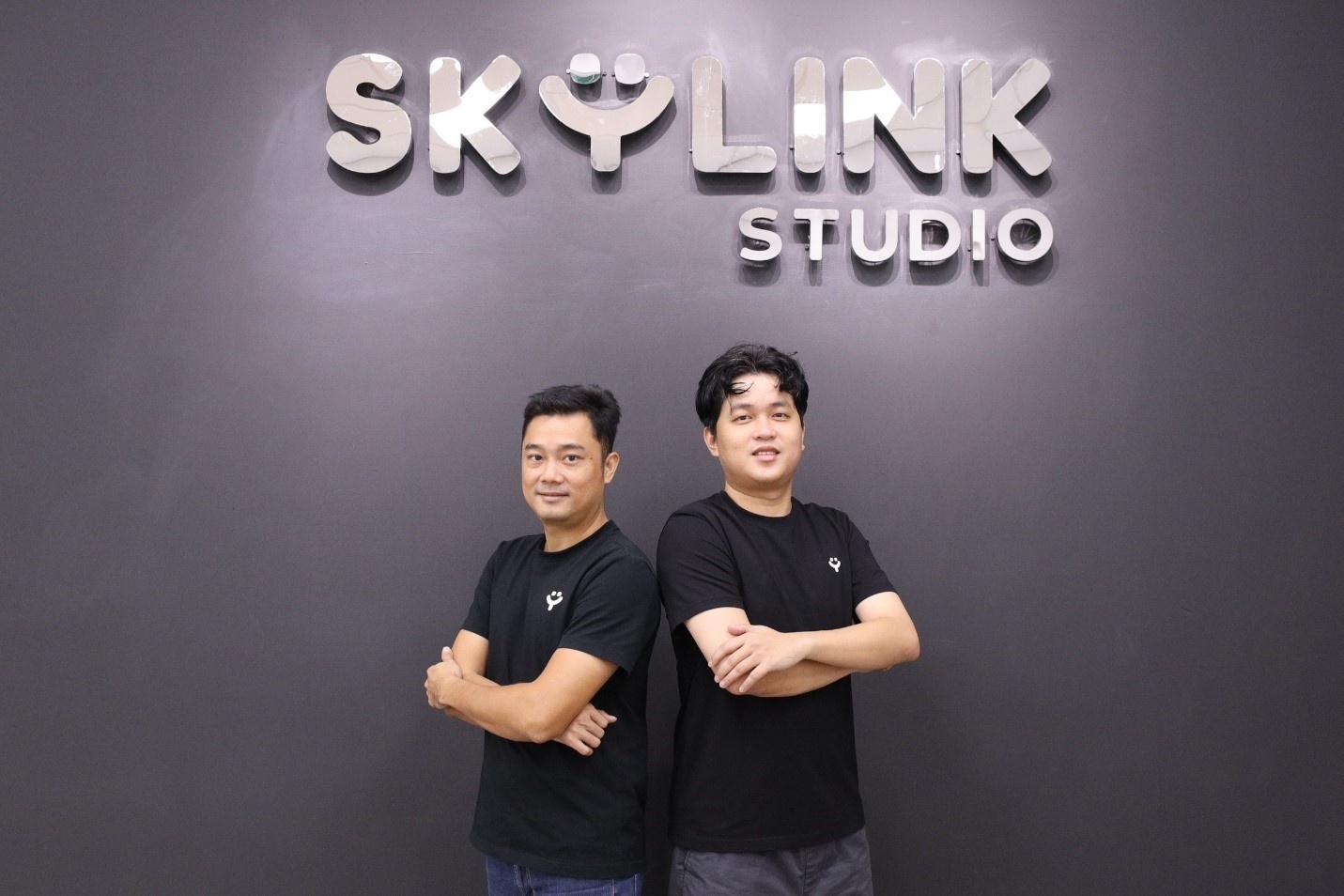
Skylink Studio leadership: Founder and CEO Nguyen Ngoc Tuan Loi (left) with creative director Dang Tuan Vinh. Photo: Skylink Studio

Looking to the long term, the company aims to build a data-optimised game development and publishing platform, positioning itself as a leading developer and publisher of classic mobile games and bringing more Vietnamese-made tech products to international users.

Vietnamese gaming businesses extend reach to international markets Vietnamese gaming businesses extend reach to international markets

More than 60 entrepreneurs and small and medium-sized businesses in the gaming industry joined a regional networking event to explore the opportunities to expand into international markets.

Digital leverage for Vietnamese gaming industry Digital leverage for Vietnamese gaming industry

The Gaming On TikTok Hanoi Summit 2025, held on April 24, showcased how the platform is supporting Vietnam’s gaming community and driving growth in the local and global markets.

Gaming industry eyes billion-dollar revenue Gaming industry eyes billion-dollar revenue

Vietnam’s gaming industry is rapidly solidifying its position as a key player in the global development landscape.

Vietnam’s gaming industry levels up for global expansion Vietnam’s gaming industry levels up for global expansion

Vietnam’s gaming industry is entering a new growth phase as local developers expand beyond the domestic market, supported by rising digital capabilities, stronger investment, and growing international demand for online entertainment.

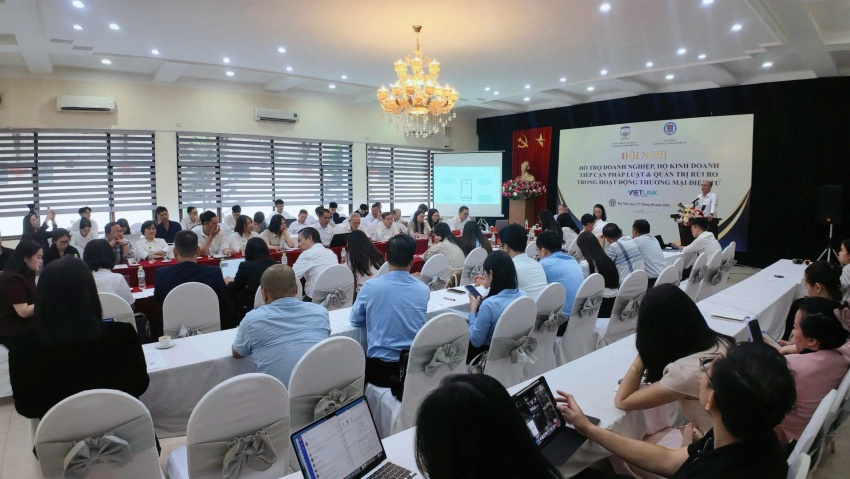
Organised by the Centre for Legal Support for Small and Medium-sized Enterprises under the Department of Civil and Economic Law of the Ministry of Justice in coordination with Vietlink Law Firm, the conference brought together experts to discuss practical legal issues arising from the growing use of e-commerce and digital platforms.

Hoang Ninh, deputy director of the Vietnam E-commerce and Digital Economy Agency under the Ministry of Industry and Trade, said the rapid growth of e-commerce platforms, social media and livestreaming was allowing businesses and household businesses to reach wider markets and scale up sales, but is also placing greater demands on internal controls.

“Sellers must provide information for identity verification, while intermediary e-commerce platforms are responsible for electronic verification before allowing sellers to conduct business. On platforms that provide online ordering functions, sellers must use their own payment accounts,” Ninh said.

Businesses consequently need clear internal arrangements covering product listings, pricing, promotions, account management and cash flows. Moving sales online does not remove requirements applicable to the goods themselves, with products requiring business licences or subject to specific conditions remaining subject to those rules when sold through e-commerce platforms.

E-commerce growth raises pressure on legal compliance
An overview of the workshop. Photo: Vietlink Law Firm

Product information has also emerged as a significant compliance issue. Online consumers often rely on images, videos, descriptions, advertising and sellers’ claims when making purchasing decisions, making accurate information on product functions, origin, quality, prices, promotions and warranties particularly important.

“Sales content can no longer be treated solely as a marketing function. It needs to form part of a company’s broader compliance and control process,” Ninh said.

The concern is particularly relevant to livestreaming and the growing use of KOLs and KOCs as sales channels. Businesses need to control information provided to promoters, establish clear guidance on permitted content and ensure prices and promotional programmes can be updated promptly, Ninh added.

The compliance burden comes as e-commerce platforms, social media and multi-channel business models enable SMEs and household businesses to reach customers far beyond their traditional markets. Small manufacturers and retailers can promote products, receive orders, process payments and arrange delivery through digital platforms without major investment in conventional distribution networks.

Yet an online transaction can involve obligations across multiple areas, including electronic contracts, taxation, invoicing, advertising, intellectual property, consumer protection, personal data and sector-specific requirements.

Dr Le Thi Hoang Thanh, deputy director of the Department of Civil and Economic Law under the Ministry of Justice, said many businesses and household businesses still face difficulties in accessing, updating and applying regulations governing e-commerce.

“A lack of information and limited capacity to identify legal risks can lead to violations and disputes, increase compliance costs and affect business reputation and performance,” she said.

“Against the backdrop of continued development of the legal framework for the digital economy, the requirement is not simply to ‘know the law’ or comply when inspections take place, but to actively identify and control risks from the outset of organising business activities in the digital environment.”

She therefore believes that greater legal awareness and stronger risk management capabilities would help businesses reduce disputes, protect their legitimate interests, strengthen competitiveness, and build consumer confidence.

Dr Tran Minh Son, director of the Centre for Legal Support for Small and Medium-sized Enterprises under the Department of Civil and Economic Law of the Ministry of Justice, identified the fragmented legal framework as a particular challenge for SMEs and household businesses.

An online business may have to comply with rules covering business conditions, product origin, advertising, promotions, electronic contracts, taxation, invoices, consumer protection, personal data and intellectual property. For smaller businesses without dedicated legal resources, keeping track of these obligations can be difficult.

Son also warned against waiting until a dispute or inspection occurs before seeking legal advice.

“On the digital environment, an advertising error can quickly reach a large customer base, while a problematic product can be sold simultaneously across several platforms,” he said.

Tax and transaction records require closer management as businesses generate revenue through multiple platforms, payment methods and sales channels. Consistent reconciliation of transaction data can help minimise discrepancies and tax compliance risks.

Consumer protection and intellectual property present further challenges. Information displayed on online shops, including product images, technical specifications, prices, return policies and sellers’ commitments, can affect the rights and obligations of both parties. Digital content and trademarks can also be copied easily, creating risks of infringement and making protection of businesses’ own intellectual property increasingly important.

“The challenge, therefore, is not simply to add more regulations, but to make the existing legal framework more accessible and practical for businesses,” Son said.

He suggested tailoring legal support more closely to the practical needs of SMEs and household businesses. Guidance on setting up online shops, electronic contracts, tax obligations, intellectual property, data protection and complaint handling could be built around situations businesses are likely to encounter.

Electronic handbooks, online Q&A platforms, legal information portals, instructional videos, model contracts and policies could also make legal guidance more accessible and help businesses manage compliance costs.

Multi-channel shopping is vital for e-commerce growth Multi-channel shopping is vital for e-commerce growth

Multi-channel shopping is on the rise, becoming a vital factor which will help retail businesses expand sales channels, thereby increasing their reach to customers and enhancing the competitive edge given the online shopping boom in Viet Nam.

Vietnam in global top 10 for e-commerce growth Vietnam in global top 10 for e-commerce growth

E-commerce in Vietnam has recorded outstanding growth of 16-30 per cent per year over the last ten years, with the market size expected to reach $20.5 billion in 2023.

Barriers remain as firms pursue e-commerce growth with EU Barriers remain as firms pursue e-commerce growth with EU

Opportunities for Vietnamese businesses in the EU cross-border e-commerce market are growing, but barriers related to regulations and legal challenges need addressing.

Enablence Technologies and ShunYun Technology complete volume production readiness at Vietnam fab
Photo courtesy of Enablence

Enablence is a leading supplier of planar lightwave circuit (PLC) optical chips for datacom, telecommunications, AI, and advanced vision applications while SYT is a semiconductor assembly (OSAT) leader.

“The launch of Enablence’s new production fab in Vietnam provides, an end-to-end optical supply chain alternative, which could mitigate supply chain risk for North American cloud hyperscalers, optical module manufacturers, and telecom customers by reducing their reliance on Chinese-origin supply,” said Todd Haugen, CEO of Enablence Technologies.

Following the strategic OSAT partnership between Enablence and SYT announced in March 2026, all major production-line equipment is now production qualified at SYT’s site in Vietnam. The initial production lines, which include Enablence’s core passive optical component portfolio, have successfully produced qualified samples, which have been released to key North American customers for evaluation.

With the production facility now complete, Enablence’s supply chain integrates chip design in Ottawa, Canada; wafer fabrication, specialised assembly, packaging and test at Enablence’s Silicon Valley Fab in Fremont, California; and advanced, high-volume packaging and assembly at SYT’s facility in Vietnam. This model was purpose-built to mitigate risk for North American cloud hyperscalers and Tier-1 optical module makers who currently source much of their optical chips in China.

SYT has completed installation of all production-line equipment and successfully produced qualified samples at its advanced manufacturing facility in Vietnam. Initial samples have already been released to key customers for evaluation, marking the transition from installation to qualified, production capability.

Optical chip manufacturing takes place in Fremont, CA, while assembly and packaging are now executed via dedicated, qualified production capacity at SYT’s facility in Vietnam, giving the completed platform full supply chain origin compliance outside of China. Having invested in new tooling and infrastructure upgrades at its Silicon Valley Fab, Enablence is now capable of fulfilling production orders for North American and global partners.

The completed platform directly supports high-speed PLC products, including Enablence’s FR4 wavelength management solutions, and custom optical engines which are required for Co-Packaged Optics and Linear Pluggable Optics deployed in AI clusters.

“The completion of our Vietnam production facility with SYT marks the final leg in building a fully compliant, resilient supply chain for the optical components that power AI infrastructure, automotive LiDAR, warehouse robotics and medical imaging,” said Haugen.

“With chip design in Ottawa, wafer fabrication at our Silicon Valley Fab, and now qualified, high-volume packaging and assembly with SYT in Vietnam, Enablence can now provide hyperscalers, module manufacturers, and telecom operators an immediate, qualified, and fully compliant alternative to Chinese-origin supply, including supporting the deployment of 800G and 1.6T optical infrastructure,” he said.

Vietnam and WEF to strengthen cooperation in AI and semiconductor technology Vietnam and WEF to strengthen cooperation in AI and semiconductor technology

Vietnam and the World Economic Forum (WEF) have agreed to strengthen cooperation in AI and semiconductor technology, following a meeting in Hanoi.

Regional cooperation crucial as Southeast Asia’s AI boom accelerates Regional cooperation crucial as Southeast Asia’s AI boom accelerates

Southeast Asia’s AI boom is attracting data centres, cloud infrastructure, and semiconductor investment, but these gains do not automatically translate into a collective regional win for ASEAN.

Japanese firm inaugurates polysilicon facility in Ho Chi Minh City Japanese firm inaugurates polysilicon facility in Ho Chi Minh City

Tokuyama Vietnam on August 13 held an inauguration ceremony for its polysilicon manufacturing plant at Phu My 3 Specialised Industrial Park (Phu My 3 SIP) in Ho Chi Minh City.

On 6 August 2026, the Tax Department of Quang Ngai Province (the “Tax Authority“) issued Official Letter No. 6661/QNG-QLDN1 (the “Official Letter“) guiding personal income tax (PIT) withholding on income paid after the termination of employment contracts.

In this Official Letter, based on the legal grounds governing personal income tax withholding under the Law on Personal Income Tax 2025 and Decree No. 253/2026/ND-CP, the Tax Authority provides guidance that where an enterprise or organization makes payments of salaries, wages, remuneration, or other amounts to individuals whose employment contracts have been terminated, and the income paid is VND 5 million or more per payment, the enterprise or organization is required to withhold and remit PIT at the rate of 10% of the income before making the payment to such individuals.

Furthermore, if the former employee earns income solely subject to the withholding rate mentioned above but estimates that their total taxable income after family circumstance deductions falls below the taxable threshold, the employee may submit a commitment letter to the income-paying organization. This commitment serves as a basis for the organization to temporarily refrain from withholding PIT. The employee assumes full responsibility for their commitment letter; any fraud detected by the managing tax authority will be handled in accordance with the law.

Based on the guidance in this Official Letter, ALIAT recommends that enterprises carry out the following necessary actions:

  • Review and identify post-termination payments to check whether the enterprise incurs any instances where income must be paid to employees after contract termination.

If applicable, the enterprise must declare and withhold 10% PIT on the income before disbursing it to the employee.

  • In cases where former employees estimate their total taxable income after family circumstance deductions will not reach the taxable threshold, the enterprise must request a written commitment letter containing all legally required content; and this document must be retained at the company headquarters for future tax declaration and finalization audits.