Draft Law on Food Safety 2025: Proposal to tighten food production and trading activities
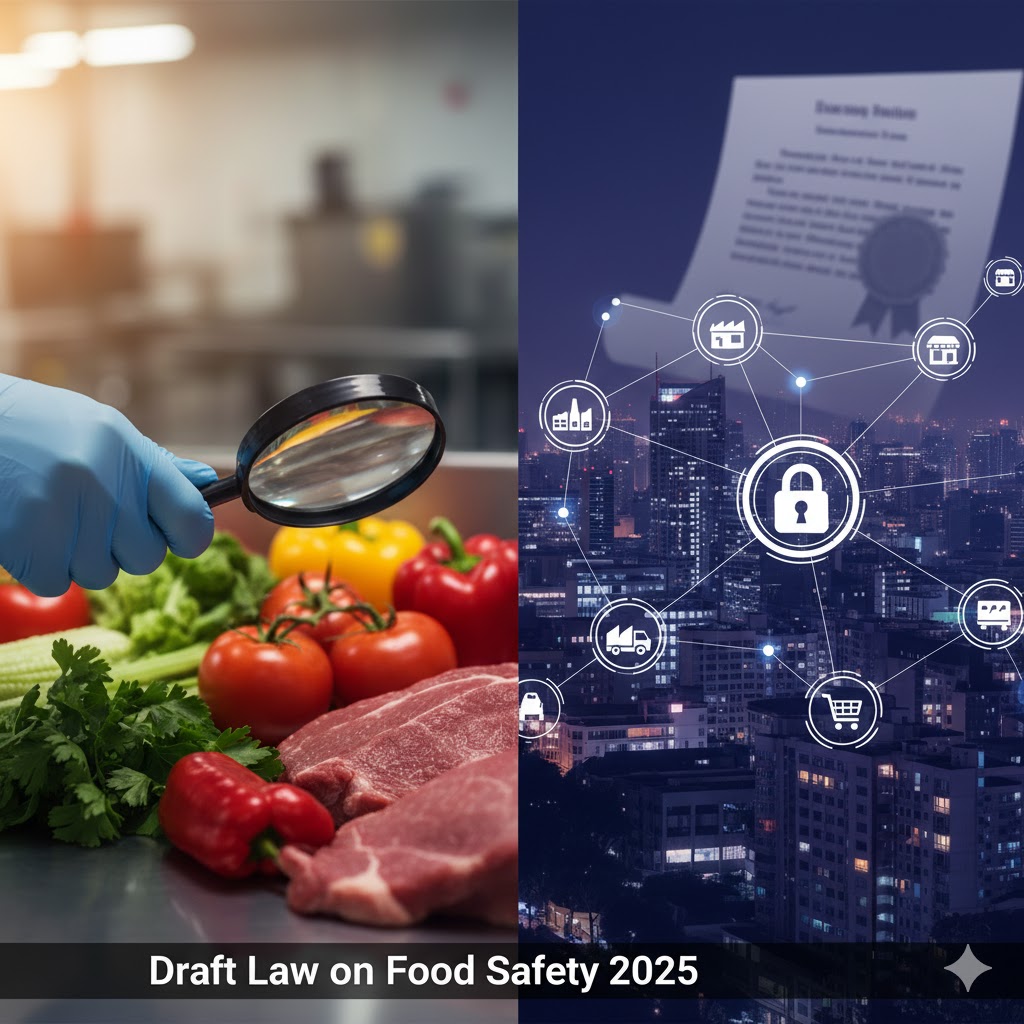
After more than 15 years of implementation, the Law on Food Safety 2010 has revealed significant limitations, particularly in keeping pace with modern production practices, e-commerce, and emerging technologies. In response, the National Assembly is currently drafting the Law on Food Safety (Amended) (“Draft”), with the objective of enhancing regulatory efficiency, strengthening food safety controls, and protecting consumer rights.
The Draft places strong emphasis on tightening conditions for food trading on e-commerce environment. A key revision is the requirement for online food businesses, in addition to compliance with existing food safety regulations, to provide sufficient information for traceability and meet further obligations such as ensuring consumer data confidentiality and publicly disclosing their licenses and details of registrants or product self-declarations.
Futhermore, the Draft also proposes stricter rules on food advertising. The Draft expands the scope of prohibited practices, including the use of images and words of doctors, pharmacists, and patients in advertisements. It also requires Key Opinion Leaders to disclose sponsorship relationships when advertising health supplements, dietary supplements, food for special dietary uses, and nutritional products for children under 36 months of age.
Packaging and labeling requirements are also proposed to be more stringent. Outer packaging labels of food and food ingredients must include barcodes, QR codes, DataMatrix codes, or other forms of code printing, in accordance with relevant coding regulations. This measure aims to strengthen transparency and facilitate traceability throughout the supply chain.
Another important proposal of the Draft is the classification of food products by risk level: high, medium, or low. Depending on their assessed risk to consumer health, food products and ingredients will be subject to either registration for circulation to the competent state authority or self-declaration. Both circulation registration certificates and self-declarations will have a five-year validity period. This reform seeks to improve oversight, prevent indefinite product announcements, and ensure that product information is regularly updated. Products classified as high-risk or medium-risk and subject to circulation registration is proposed to include health supplements, food for special dietary uses, nutritional products for children under 36 months of age, and other dietary supplements.
Overall, the Draft reflects the State’s determination to strengthen standards and tighten quality management in the food sector. By reinforcing product controls, increasing transparency, and expanding penalties, the Draft aims to curb the circulation of unhygienic and counterfeit food, better protect public health, and align Vietnam’s food safety management system with the demands of a modern, technology-driven economy.




