SABECO wins multiple international beer awards

Several products from Saigon Beer–Alcohol–Beverage Corporation (SABECO) were recognised at established international beer competitions, a development analysts view as a positive signal as the brewer upgrades its portfolio and expands its presence in higher-value segments.

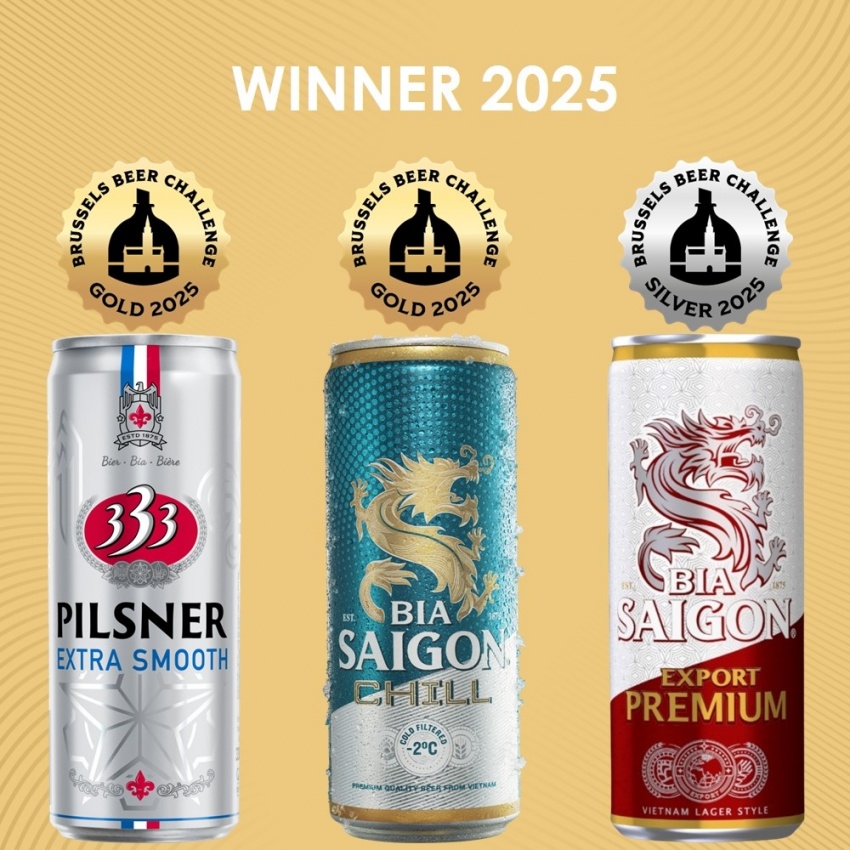
At the Brussels Beer Challenge 2025 in Belgium, with results announced on November 18, 333 Pilsner won a Gold Medal in the Light Lager category, while Saigon Chill secured Gold in the Ice Lager category. Saigon Export Premium also received a Silver Medal in the same category.

The accolades continued in Asia, as Saigon Export Premium secured a Silver Medal at the Japan International Beer Cup 2025, a competition with more than 25 years of history and participation from brewers in over 30 countries. This marked the third year, and the second consecutive year, that SABECO products have been recognised in the Japanese market.

According to the company, the award-winning beers are part of the product lines prioritised for upgrades during the 2021–2025 period, when SABECO accelerated its strategy towards the mid- to high-end segments in line with changing urban consumption trends and international standards. While 333 Pilsner and Saigon Chill are designed to meet demand for more diverse drinking experiences, Saigon Export Premium is positioned as an international-standard premium lager.

SABECO noted it has collected more than 50 international awards in recent years, reflecting the outcomes of sustained investment in technology and operational improvements. The company is pursuing a three-pillar strategy encompassing people development, operational standardisation, and efficiency enhancement. Among these, improving efficiency is viewed as critical to cost optimisation and margin expansion, metrics that investors are closely monitoring as competition in the beer market intensifies.

According to Lester Tan, CEO of SABECO, the brewer is strengthening its product portfolio through diversification and clear positioning across price segments. “We aim to offer consumers more choice, from heritage brands to modern products. Each plays a strategic role in SABECO’s growth structure,” he said.

Tan added that the group’s ambitions extend beyond consolidating its domestic position. “As Vietnam sets its sights on stronger regional competitiveness, SABECO seeks to grow alongside the country,” he noted.

Market conditions show domestic beer consumption has been affected by stricter road safety regulations, evolving consumer behaviour, and broader economic pressures. However, the premium segment is expected to maintain solid growth, particularly in major cities. Analysts believe SABECO’s newer product lines could help the company strengthen its presence among younger consumers who favour more contemporary beer-drinking styles.

Industry experts suggest that the increasing presence of Vietnamese brands, including SABECO, at international competitions highlights a clear improvement in the quality of domestic beer. This trend could enhance investor confidence and raise brand visibility in export markets.

Over the longer term, SABECO’s portfolio upgrade strategy is expected to support gross margin improvement and provide a foundation for sustainable growth as Vietnam’s beer market becomes increasingly polarised between mass-market and premium segments.


Petrovietnam Drilling and Well Service Corporation (PV Drilling) has released its 2025 results, marking the strongest performance in a decade.

Along with this, the company reported estimated revenue of $420 million approximately, up 10 per cent on-year. Pre-tax and after-tax profits came to $44 million and $33.2 million, up 17 per cent and 19 per cent, respectively, compared to 2024.

These figures mark PV Drilling’s highest profit level since 2015. Compared to the annual plan, actual revenue exceeded the target by 46 per cent, while pre-tax and after-tax profits were 39 per cent and 57 per cent higher than projections, respectively.

Oil and gas firms post strong 2025 results
Photo: Petrovietnam

Sharing the same upward momentum, Binh Son Refining and Petrochemical JSC and Petrovietnam Gas Corporation (PV GAS) also recorded strong results.

Binh Son Refining and Petrochemical produced 7.9 million tonnes, equivalent to 108 per cent of its plan, generating revenue of around $5.7 billion and contributing $570 million to the state budget.

In the fourth quarter of 2025 alone, the company posted a sharp turnaround, swinging from a $4.1 million contraction in the same period last year to posting a pre-tax profit of more than $81.5 million in the period.

For the full year, its pre-tax profit reached 181.6 million, exceeding the annual plan by 262 per cent and more than six times higher than the $29.4 million level recorded one year ago.

The company noted that 2025 was a challenging year as Brent Crude prices fell by nearly 20 per cent to around $64 per barrel, while exchange rates climbed and competition from regional supply intensified.

Despite these headwinds, the company managed to swim against the tide through an operational optimisation strategy. In the second half of the year, the Dung Quat Refinery maintained an average equivalent capacity utilisation rate of up to 122 per cent, helping second-half profits surge by 113 per cent compared with the first half, despite unfavourable market conditions.

Similarly, PV GAS reported estimated consolidated revenue of $5.36 billion, up 27 per cent on-year, while pre-tax profit reached $580 million, up 10 per cent, completing 181 per cent of its revenue target and 218 per cent of its profit target for 2025.

A key highlight for PV GAS in 2025 was record liquefied petroleum gas/liquefied (LPG/LNG) natural gas trading volume of more than 5 million tonnes, 2.65 times higher than the plan.

Domestic consumption grew steadily by 8 per cent, while international trading surged to over 3.2 million tonnes, double the 2024 level.

LPG/LNG activities currently account for about 56 per cent of total consolidated revenue, with international business contributing 34 per cent, already surpassing the strategic target set for 2030.

On the investment front, PV GAS disbursed more than $136 million in 2025, equivalent to 103 per cent of the plan, and secured approval for major infrastructure projects such as the Vung Ang LNG terminal and the Haiphong refrigerated LPG storage facility.

For 2026, PV GAS targets 10 per cent revenue growth, focusing on international markets and clean energy, with plans to pilot green hydrogen production at the Dinh Co Gas Processing Plant from the first quarter of 2026.

As for Petrovietnam Coating JSC (PV Coating), although it has yet to disclose detailed 2025 financial figures, the company said key economic and financial indicators – including output, revenue, profit, state budget contributions and employee income – were all higher than in 2024 and above the 2025 plan.

PV Coating completed pipe coating contracts (onshore and infield pipelines) for the Lo B-O Mon gas pipeline chain – Vietnam’s crucial national energy project, as well as the Lac Da Vang and Thien Nga–Hai Au oil-field projects.

The company also continued to expand research, development and non-core services, such as internal coating for fuel pipelines at Long Thanh Airport, field joint coating for offshore pipelines at Lac Da Vang, Thien Nga–Hai Au projects, fireproof coating, maintenance and repair services, and trading activities.

According to Petrovietnam Securities JSC, the Vietnam National Industry-Energy Group (Petrovietnam) is rapidly aligning with the upstream investment trend, with plans to allocate up to 52 per cent of its total $2 billion investment budget to this segment.

Driving the sector’s overall momentum is the Lo B-O Mon mega project, which has entered a synchronised implementation phase, targeting the first gas stream by August 2027.

The massive scale is expected to generate abundant workloads and long-term benefits for upstream service providers such as Petrovietnam Technical Services Corporation and PV Drilling.

In addition, the oil and gas industry outlook has been further bolstered by positive progress at the Lac Da Vang oil-field, highlighted by the successful launch of the jacket and piles for the Lac Da Vang A platform.

In the downstream segment, global refining margins are forecast to remain elevated in 2026 due to constrained supply in developed markets.

Meanwhile, the midstream segment is expected to see divergence. Crude oil transportation is likely to remain stable, supported by stockpiling demand amid declining oil prices, while refined product transportation may face challenges as importing countries ramp up their domestic refining capacity.

Petrol law advances tailored for benefits Petrol law advances tailored for benefits

An amended Law on Petroleum is expected to revive funding opportunities for the oil and gas sector as many fields are reaching their productive peaks or experiencing a state of decline – as long as some outstanding issues are ironed out.

Oil and gas sector counting on vital new investment cycle Oil and gas sector counting on vital new investment cycle

As oil prices anchor around $90-100 per barrel globally, changes in the oil and gas policy of many markets are expected to bring a new cycle of investment to Vietnam – with the government also taking steps to transition to renewable energy sources by cooperating with countries around the world.

Understanding global oil and gas sector management Understanding global oil and gas sector management

Decree No.95/2021/ND-CP on petroleum trading officially took effect at the beginning of the year and was expected to strengthen the market. However, the continuous changes in gasoline prices, combined with the inadequacies in management, has had a great impact on market supply and demand and also pushed the business and consumer world into unprecedented difficulties. The question of how to foster a healthy market and ensure energy security has not been resolved.

At the Vietnam Socioeconomic Achievements Exhibition in August in Hanoi, TH Group showcased what it described as a “digital miracle” to visitors: an advanced traceability technology that allows comprehensive tracking of every stage in the 12-step production process of TH true MILK – from pasture, farms, and factory all the way to consumer’s dining tables.

High-tech adoption for TH true MILK

This innovation mirrors the agricultural digitalisation vision persistently pursued by the company, in which modern agricultural development is inseparable from data, technology, and AI.

With this major step, TH has become the first dairy enterprise in Vietnam to provide traceability data on the National Data Association’s (NDA) Trace platform, a blockchain-based, nationally integrated system developed by Vietnamese experts, featuring decentralised identity technology.

The technology allows users to control their digital identities by managing their own personal data, which is secured using cryptography and distributed ledger technology like blockchain.

Each batch of TH true MILK is provided with a unique digital ID, enabling end-to-end tracking from raw material input, production, quality control, packaging, and transportation to final distribution.

Every action in the supply chain is recorded, verified, and protected against tampering or forgery. This technology complies with international GS1 standards and is compatible with EBSI Trace 4EU – the European Union’s global traceability system – providing comprehensive assistance for the enterprise’s cross-border supply chain connection.

On every TH milk carton, the QR code works as a digital certificate of trust. “When scanning the code, consumers can access full details about the milk’s origin, production process, ingredients, nutritional content, storage instructions, expiry date, and packaging specifications,” said Nguyen Xuan Khoa, chief information officer at TH Group. “They can even discover what, when, and how the cows were fed and treated, and how they were milked. Everything is transparent and verifiable.”

TH taking the lead in using data and technology for product traceability has marked a defining moment in its 15-year journey to bring greater transparency to the Vietnamese dairy market in a bid to protect consumers’ health.

TH Group has spent years advocating for clearer labelling regulations, urging authorities to revise the technical standards for dairy ingredient declarations on product packaging. The company has consistently adhered to full disclosure of its raw materials. All of its products are made from pure fresh milk sourced directly from its own dairy farms, processed using world-class technology to preserve the natural purity and nutritional essence of its milk products.

Product traceability is the latest solution in TH Group’s evolving ecosystem of high-tech innovation and scientific management. The company has consistently stressed the crucial role of digital transformation in unlocking the full potential of agriculture. In TH’s strategy, agricultural products must meet two key criteria including competitive pricing and high quality – both of which require high technology.

Thanks to a vast data repository accumulated over the past 15 years, TH Group is now well positioned to implement a comprehensive traceability system. For consumers, scanning a QR code on TH true MILK packaging reveals a journey that begins in the feed crop fields that nourish TH’s nearly 70,000-strong dairy herd.

These fields are maintained by smart irrigation systems that use sensors to monitor soil moisture and adjust water usage accordingly. Crops such as maize, kaoliang, and mombasa and mulato grass are continuously monitored by sensors and AI-powered analytics to ensure optimal nutritional value. TH’s automated machinery performs the work equivalent of hundreds of manual labourers each day.

Each TH dairy cow is installed with an electronic identification chip connected with Afifarm, an advanced Israeli livestock management software. This system provides real-time tracking of each cow’s health, diet, milk output, and reproductive cycle.

TH has also adopted IVF technology for dairy cows, enabling the group to independently breed high-quality herds. Data collected from farm to factory is synchronised, ensuring consistent quality control from the milking stage.

Since it was established, TH’s fresh milk processing plant was equipped with state-of-the-art technology sourced from G7 nations and Europe. It currently produces one million litres per day – a record for Vietnam’s dairy industry.

Particularly, TH Group has applied an enterprise resource planning platform from SAP to manage and analyse real-time data across the entire production chain. This system allows TH to anticipate market demand, adjust production schedules, and accurately plan agricultural activities such as sowing, fertilising, and harvesting, ensuring that product quality remains consistently high.

TH Group commences construction of foodstuff factory in Thai Binh TH Group commences construction of foodstuff factory in Thai Binh

On February 18, TH Group commenced the construction of a foodstuff factory in Quynh Trang commune in the northern province of Thai Binh’s Quynh Phu district, marking an important milestone on the company’s journey to bring consumers nutritious and safe products such as fresh milk, vegetables, and drinking water, among many others.

TH Group showcases products at CAEXPO 2024 TH Group showcases products at CAEXPO 2024

TH Group, the owner of the TH True Milk brand, is showcasing its high-quality products at the 21st China-ASEAN Expo (CAEXPO) from September 24-28.

Thai Huong: a visionary business leader bridging Vietnam and Russia Thai Huong: a visionary business leader bridging Vietnam and Russia

Russian President Vladimir Putin has presented the Order of Friendship to Thai Huong, founder and chairwoman of the Strategic Council of TH Group, and general director of BAC A BANK.

Kaluga governor praises TH Group’s world-leading dairy farm Kaluga governor praises TH Group’s world-leading dairy farm

Governor of Russia’s Kaluga province visited TH Group’s high-tech dairy farm in Nghe An, the world’s largest closed-loop facility of its kind.

UOB: An outstanding year but momentum to slow ahead
Source: UOB

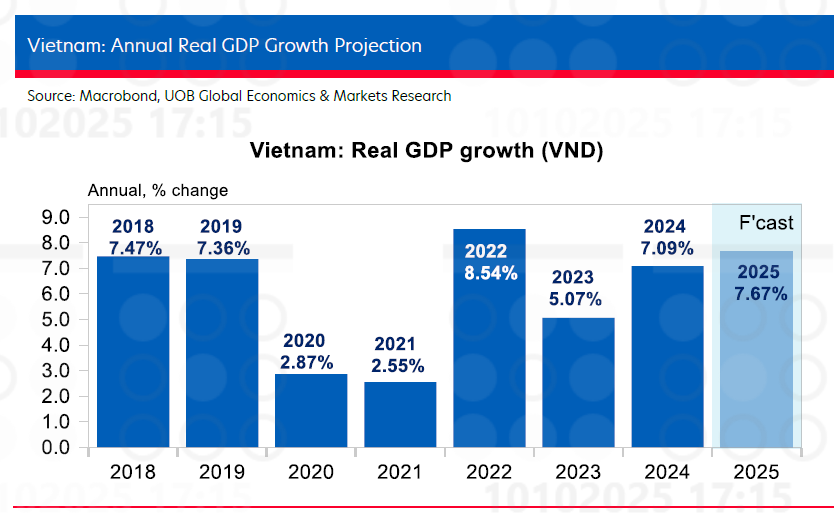
In a report released on December 22, UOB projected fourth-quarter growth at 7.2 per cent on-year, following a strong 8.23 per cent rise in the third quarter – the highest since the post-Covid rebound – after 8.19 per cent in the second quarter. The bank noted that resilient exports and production helped sustain growth despite headwinds from US tariffs.

In the first 10 months of the year, Vietnam’s exports surged 16.8 per cent on-year, despite a high base a year ago at 14.2 per cent on-year. One key driver was shipments to the US, which jumped by 28.1 per cent on-year during the same period (24.3 per cent last year), as orders accelerated (like front-loading) after US reciprocal tariff rates were dialled back to a base rate of 10 per cent globally. Cumulative trade surplus in October came in at $18.7 billion, smaller compared to the $22.4 billion in 2024, due to sharply higher input requirements in response to export demand.

Manufacturing saw a broad-based increase in tandem, increasing 10.8 per cent on-year in the first nine months, a faster pace compared to the 9.4 per cent rise in the same period in 2024. With four consecutive months of above-50 readings, Vietnam’s Purchasing Managers’ Index suggests that the outlook for the manufacturing sector remains positive.

UOB report noted that despite volatility in US trade and tariff policies since early 2025, foreign investment into Vietnam has continued to gain traction, supported by investor confidence in the outlook for the country and ASEAN. As supply chain realignments persist, realised foreign investment recorded $21.3 billion in the first 10 months, well above our expectations of $20 billion for the full year and $19.6 billion in the same period in 2024. The pipeline remains strong, as indicated by registered overseas funding which jumped 15 per cent on-year to $31.5 billion, from $27.3 billion in the same period last year.

Domestic sentiment is similarly upbeat, with retail sales expanding at an average 9.8 per cent on-year in the first 10 months, ahead of the 8.6 per cent pace in 2024. This comes on the back of rising inbound visitors. In the first 10 months, visitor arrivals surged by more than 21 per cent on-year to 17.2 million, from more than 14.1 million in the same period last year. Based on the current momentum, 2025 is on track to exceed the record 18 million visitors in 2019 and will be an added catalyst for domestic spending.

“With real GDP expanding by a robust 7.85 per cent on-year in the first three quarters, Vietnam’s outlook remains positive for 2026,” UOB reported. “However, one downside risk to watch is the implementation of the final reciprocal tariff rates since August, which saw the rate for Vietnam staying at 20 per cent, which could potentially dampen global trade activity going into 2026 as US consumers and producers are burdened with higher import costs.”

Due to a high base in the fourth quarter last year, UOB anticipates the final quarter would be a challenge, given a backdrop of tariffs and trade frictions. As such, UOB anticipates Vietnam’s fourth-quarter growth to slow to 7.2 per cent on-year, for a full-year expansion of 7.7 per cent. It would be even more daunting to achieve the official 8.3-8.5 per cent projection, which would require the fourth quarter expansion in the range of 9.7-10.5 per cent on-year.

“For 2026, Vietnam’s growth pace could moderate slightly to 7 per cent due to base effects and dissipation of front-loading,” UOB anticipated.

Vietnam’s inflation rate has yet to show a meaningful slowdown. Inflation rate in the first 10 months hit 3.3 per cent, compared to the average of 3.6 per cent in 2024 and 3.26 per cent in 2023. Main drivers continue to be costs of housing and construction materials (6.2 per cent on-year average, 18.8 per cent weight) and healthcare (17 per cent on-year average, 5.4 per cent weight).

“Combined with the potential for decent growth prospects going into 2026 and persistent VND weakness, these factors would constrain the State Bank of Vietnam’s (SBV) ability to ease policy,” UOB reported. “As such, we expect the SBV to keep its refinancing rate steady at 4.5 per cent.”

The VND is on track to finish weaker against the USD for the fourth consecutive year. While tariff-related uncertainties weighed on sentiment, stronger-than-expected GDP growth helped limit losses, keeping the year-to-date depreciation at a modest 3.5 per cent, broadly in line with prior years. Volatility remained contained, supported by the SBV holding its benchmark rate steady at 4.5 per cent throughout the year and deploying foreign currency interventions to smooth market fluctuations.

Looking ahead to 2026, UOB expects the VND to continue underperforming regional peers despite a broadly softer USD backdrop. UOB maintains a cautious stance on the VND, and updated USD/VND forecasts are at 26,300 in the first quarter next year, 26,100 in the second quarter, 26,000 in the third quarter, and 25,900 in the fourth quarter.

UOB Vietnam elevates retail banking experience with enhanced credit card suite UOB Vietnam elevates retail banking experience with enhanced credit card suite

UOB Vietnam has unveiled a refreshed credit card portfolio, offering enhanced lifestyle benefits and exclusive privileges through partnerships with renowned brands.

Vietnam's Q3 growth surged on export strength: UOB Vietnam’s Q3 growth surged on export strength: UOB

Vietnam’s economic performance so far in 2025 has been deemed stronger than expected, and with an expansion of 7.85 per cent on-year achieved in the first three quarters, the outlook remains positive for 2025, according to UOB (United Overseas Bank).

Vietnam leads ASEAN in consumer optimism Vietnam leads ASEAN in consumer optimism

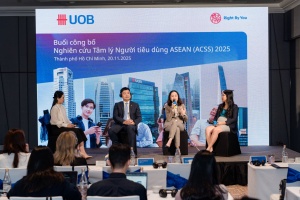
Vietnam continues to lead the region in consumer optimism, according to the sixth edition of the ASEAN Consumer Sentiment Study (ACSS) released by UOB on November 20.

On 10 November 2025, the Government issued Decree No. 293/2025/ND-CP prescribing the minimum wage applicable to employees working under labor contracts, effective from 1 January 2026.Compared with Decree No. 74/2024/ND-CP, the monthly regional minimum wage increases by an average of 7.2%, equivalent to an increase of VND 250,000 – 350,000. The hourly minimum wage increases by an average of 6%, equivalent to an increase of VND 700 – 1,700.

Specifically: Region I: The monthly minimum wage increases from VND 4,960,000 to VND 5,310,000 (hourly minimum wage increases from VND 23,800/hour to VND 25,500/hour); Region II: The monthly minimum wage increases from VND 4,410,000 to VND 4,730,000 (hourly minimum wage increases from VND 21,200/hour to VND 22,700/hour); Region III: The monthly minimum wage increases from VND 3,860,000 to VND 4,140,000 (hourly minimum wage increases from VND 18,600/hour to VND 20,000/hour); Region IV: The monthly minimum wage increases from VND 3,450,000 to VND 3,700,000 (hourly minimum wage increases from VND 16,600/hour to VND 17,800/hour).

In addition, Decree No. 293/2025/ND-CP provides guidance on the application of regional boundaries, consistent with changes to administrative boundaries taking effect from July 2025. Specifically, if an employer operates in an industrial park, export-processing zone, high-tech park, or digital-technology zone spanning multiple regions with different minimum wage levels, the employer must apply the highest applicable regional minimum wage. In cases where an employer operates in a newly established administrative area formed from one or more areas with different minimum wage levels, the highest minimum wage shall apply.

To ensure compliance with the new minimum wage requirements, employers should proactively review and adjust relevant provisions in labor contracts, collective bargaining agreements, and internal regulations to align regional minimum wage levels accordingly and safeguard employees’ rights.

On 6 November 2025, the Government issued Decree No. 292/2025/ND-CP detailing and guiding the implementation of Resolution No. 216/2025/QH15 dated 26 June 2025 of the National Assembly on the extension of the agricultural land use tax exemption period (“Decree 292”). This Decree takes effect from 1 January 2026.

Under Decree 292, the agricultural land use tax exemption period is extended for an additional 05 years. Land category classifications for tax calculation purposes continue to be determined in accordance with Decision No. 326/TTg of 1996 and any subsequent decisions of the Prime Minister approving adjustments to the agricultural land tax category classifications (if any).

The entities eligible for agricultural land use tax exemption remain unchanged, including land areas used for research; land used for annual crops; land used for salt production; and agricultural land directly used for production by poor households, households, individuals, and cooperatives. In particular, the determination of “poor households” for purposes of tax exemption for agricultural land allocated or recognized by the State is based on the poverty standards promulgated under Government decrees; however, if the provincial People’s Committee issues its own local poverty standards, the determination must follow the standards issued by that respective provincial-level People’s Committee.

In addition, for agricultural land allocated by the State to organizations or units for management but not directly used for production and instead leased out or contracted to other organizations or individuals, the State shall reclaim the land in accordance with the Land Law. Pending withdrawal, the organizations concerned must pay 100% of the agricultural land use tax.

The agricultural land use tax exemption period under this Decree applies for five years, from 1 January 2026 until the end of 31 December 2030.

Under the rapid growth and strong development of e-commerce, the current legal framework under existing guiding instruments—specifically Decree No. 52/2013/ND-CP and its amending and supplementing documents—has revealed various shortcomings and obstacles, failing to address newly arising issues in the practical operation of e-commerce in Vietnam as well as in cross-border transactions.

With the aim of fully and comprehensively institutionalizing the Party’s orientations and the State’s policies, as well as incorporating international commitments in line with global practices and addressing the inadequacies of the current legal framework, the Ministry of Industry and Trade has completed the draft Law on E-Commerce (the “Draft”). Several notable proposals under the Draft are as follows:

The Draft proposes supplementing specific regulations governing new e-commerce models, including direct e-commerce business platforms, intermediary e-commerce platforms, social networks operating for e-commerce purposes, and multi-service integrated platforms, instead of regulating only websites for e-commerce and e-commerce service websites as currently provided.

The Draft also proposes to expand the responsibilities of individuals involved in selling activities on e-commerce platforms, including the obligations of livestream sellers and affiliate marketers regarding identification of sellers, full disclosure of product information, and avoidance of misleading representations concerning the seller or the nature of the product. The Draft further proposes that domestic sellers be verified through VNeID and foreign sellers through lawful identification documents issued by the country of their residence.

For e-commerce platforms operated by foreign organizations or individuals, the Draft introduces additional requirements for these entities to conduct business in Vietnam. Depending on the type of e-commerce platform, the Draft provides for varying obligations, ranging from appointing or authorizing a legally competent representative in Vietnam to fulfill tax obligations, address disputes, and protect consumer rights, to establishing a legal entity in Vietnam and complying with foreign investment regulations in the e-commerce sector.

In addition, the Draft proposes supplementing minimum responsibilities for service providers supporting e-commerce activities, such as providing authorities with information related to sellers and products upon request; proactively reporting signs of legal violations in e-commerce activities to competent authorities; and terminating cooperation with e-commerce platforms that violate the law when so requested by the authorities.

Overall, the Draft represents an important step toward improving the legal framework governing the e-commerce sector in Vietnam. The proposed amendments and supplements help address the shortcomings of existing regulations, strengthen consumer protection, and create a more transparent environment for business development. The Draft is expected to contribute positively to socio-economic development in the context of Vietnam’s ongoing digital transformation.

After nearly 10 years of implementation, the 2014 Bankruptcy Law has revealed various limitations and practical obstacles. In line with Resolution No. 68-NQ/TW of the Politburo, the Draft Bankruptcy Law (amended) 2025 (“the Draft”) has been developed with significant procedural reforms, prioritizing corporate rehabilitation instead of solely declaring bankruptcy, and is expected to take effect on 1 March 2026. The Draft also introduces simplified procedures and the use of electronic platforms for filings, notifications, and creditor meetings to shorten processing time and enhance transparency.

First, the Draft proposes adjusting the criteria for determining insolvency by extending the overdue period for payable debts from 03 months to 06 months, aiming to prevent premature commencement of bankruptcy proceedings and allow at-risk enterprises additional time to remedy their financial situation.

Next, the Draft proposes introducing a rehabilitation procedure as an independent mechanism that enterprises at risk of insolvency may proactively initiate. Accordingly, an enterprise at risk of insolvency may submit a petition to a competent court requesting rehabilitation, together with a corporate rehabilitation plan. The court may seek opinions on the proposed plan from administrators, asset management enterprises, and relevant organizations and individuals.

Based on these assessments, the competent court may issue a decision approving the rehabilitation plan. During the implementation period of the plan, the enterprise’s business activities will be placed under the supervision of asset management enterprises, and supervisory individuals or organizations, all of whom must submit monthly reports to the court on the plan’s implementation. During this period, creditors are not permitted to request the commencement of bankruptcy proceedings. The enterprise may also suspend interest payments on debts incurred prior to the approval of the rehabilitation plan, have its outstanding tax liabilities frozen, and temporarily suspend contributions to the retirement and survivorship fund.

The court will issue a decision to terminate the rehabilitation plan if the enterprise successfully completes it and restores solvency, or if implementation proves ineffective based on reports from asset management enterprises. Termination also applies where the enterprise engages in prohibited acts—such as gifting or dispersing assets, waiving receivables, prematurely paying debts, or distributing profits—during the rehabilitation period.

Overall, the Draft Bankruptcy Law (amended) 2025 reflects a clear reform-oriented approach, shifting the focus from bankruptcy liquidation toward enhancing corporate rehabilitation mechanisms, while modernizing procedures through simplified steps and digital applications. These revisions are expected to address long-standing shortcomings of the 2014 Bankruptcy Law and establish a more effective and transparent legal framework for corporate restructuring in the coming years.

On 30 November 2025, Decree No. 274/2025/NĐ-CP, detailing the implementation of several provisions of the Law on Social Insurance regarding delayed and evasive contributions to compulsory social insurance and unemployment insurance, as well as complaints and denunciations in the field of social insurance (“Decree 274”), will officially take effect.

Under Decree 274, enterprises that delay or evade the payment of compulsory social insurance and unemployment insurance contributions shall be required to pay an additional interest of 0.03% per day, calculated based on the amount and number of days of delayed or unpaid contributions. This is a strong measure aimed at enhancing deterrence, safeguarding employees’ entitlements, and ensuring strict compliance with insurance obligations.

Notably, Decree 274 also provides that acts of delayed payment may be reclassified as acts of evasion if the enterprise fails to remedy the delay within 60 days from the statutory payment deadline or fails to fulfil its obligations after receiving a written reminder from the social insurance authority.

However, in the spirit of supporting and accompanying enterprises, Decree 274 also recognizes certain circumstances that shall not be considered as acts of evasion, including: severe natural disasters such as storms, floods, or droughts; dangerous epidemics officially declared by competent authorities; impacts caused by a state of emergency as prescribed by law; and other force majeure events as defined under the Civil Code.

With the promulgation of Decree 274, the Government reaffirms its determination to tighten discipline in the implementation of social insurance obligations, while simultaneously promoting transparency and accountability among enterprises in ensuring the lawful rights and benefits of employees.

On October 10, 2025, the Da Nang City Tax Department issued Official Letter No. 1820/DAN-QLDN2 (“Official Letter”) to address enterprises’ inquiries regarding the timing of invoice issuance and the delivery of goods and services at the end of the month in accordance with regulations on invoices and supporting documents.

The Official Letter reaffirms the general principle that the time of invoice issuance is the time when ownership or the right to use goods is transferred to the buyer, or when the provision of services is completed.

Only in cases involving the sale of goods or the provision of services in large quantities and on a frequent basis—such as electricity, water supply, television, telecommunications, securities, computerized lottery, and transportation support services for railway, road, and aviation—may the seller issue monthly invoices based on an agreed-upon billing cycle between the parties.

Accordingly, the Official Letter emphasizes that for transactions not falling under the aforementioned categories, enterprises are not permitted to issue invoices on a monthly basis, even if the parties have a written agreement stipulating the issuance of monthly invoices.